Efforts to recognize women’s rights—as well as build and restore them—goes beyond Women’s History Month
by Dorothy Korber
Each year, Women’s History Month is observed in March as a celebration of American women’s contributions and successes—but it’s also a time to recognize that the struggle for equity, access and justice continues year-round.
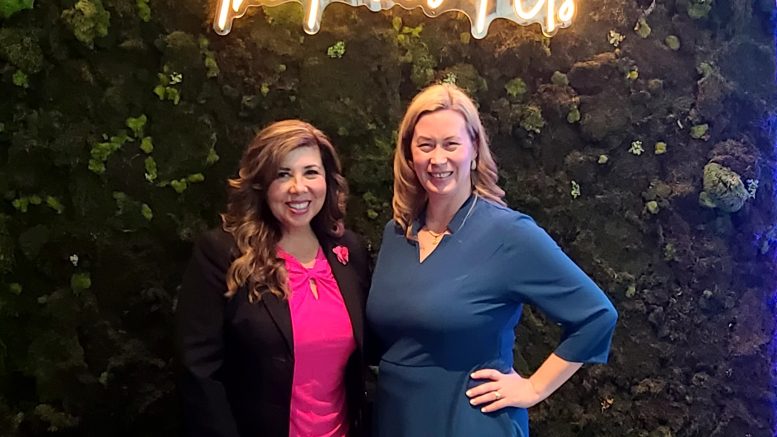
“It’s an opportunity to remember that while we’ve come a very long way, we still have a long way to go,” says Darcy Totten, executive director of the California Commission on the Status of Women and Girls (CCSWG). “Yes, there’s been incredible progress in the last 60 years, but recently we’ve seen stagnation and significant reversals worldwide.”
Dr. Rita Gallardo Good, the commission’s chair, stresses the importance of continued work.
“Now is the time to lean in and double down,” Dr. Good says.
The 60-year-old commission is the only state agency to focus exclusively on the needs and concerns of women and girls of all ages and backgrounds.
“Specifically, we study laws and social practices that impact women and girls and cause persistent inequities,” Totten explains. “An enormous amount of legislative work on equity issues has either been written by commissioners, co=-sponsored by the Commission, or endorsed by it. We are close partners with statewide women’s advocacy groups, the Office of the First Partner, community groups, and support the incredible work of the powerhouse Legislative Women’s Caucus.”
“This is about fairness, the fact is that everyone is impacted when women are treated inequitably.”
Darcy Totten
Executive Director, California Commission on the Status of Women and Girls
She adds that the persistent pay gap between men and women remains one of the commission’s biggest priorities. Last year, that gap widened somewhat, with women now paid 18.6 percent less than men on average.
“In the United States women employed full time earn 81 cents on the to men. Factor in part-time workers, and that drops to 76 cents, Totten says. “The inequity gets worse when you look at race. The wage gap for black women is 63 cents on the dollar, for Latinas it’s 54 cents. This is about fairness, and the fact is that everyone is impacted when women are treated inequitably. But it’s also about the economy. Paying women what they have actually earned lifts whole communities out of poverty.”
Dr. Good agrees that pay equity is a main priority. She sees two other areas of vital importance.
“In light of the direction we are going as a country we also need to think about the availability of health services and their support systems,” she says. “This has become crucial with all the federal cutbacks. The third area is education—we know that when women have opportunities for quality higher education, it leads to upward mobility.”
Meanwhile, the problems women face are entrenched and, indeed, historic.
“No system in America was built with women’s full participation in mind,” Totten says. “These systems were created to reflect a world where women would be at home and men would be running the world. What are we going to do to include half the population that has been deliberately left out? How do we build a world that reflects everyone that lives in it?”
But change is afoot, and the CCSWG aims to stay ahead of it as new challenges emerge. And not all the news is dire.
“By 2048, we will have seen the largest wealth transfer in history,” Totten notes. “Women will inherit about 70 percent of it. What does that mean? Will we buy up companies and make them run differently? How will this impact health care, social services, non-profits? We have an opportunity to remake the world and we must seize the moment.”
With another Women’s History Month now history, the future beckons. Totten says the commission is committed to change.
“Let me say something to women collectively. It’s a world we had to claw our way into,” she says. “Yes, we are facing setbacks now and people are being hurt. But we will have an opportunity to rebuild. And this time we will all need to be at the table.”
It’s a group effort, she says.
“We need a future that includes every one of us, and we need to do it together.”
For more information on the California Commission on the Status of Women and Girls visit https://women.ca.gov/