
California’s 58 counties sit at the center of the state’s safety net, quietly processing billions in healthcare and food assistance each year. Now, county officials warn that a federal law, H.R. 1 (the One Big Beautiful Bill Act), could shift as much as $9.5 billion in costs onto local governments, forcing cuts that could ripple through hospitals, public safety, and basic services.
At stake is not just coverage for more than a million Californians, but the stability of the healthcare system itself. As people lose Medi-Cal and food assistance, often because of new administrative barriers rather than ineligibility, counties would be pushed back into a role they have not played at scale in more than a decade: provider of last-resort care.
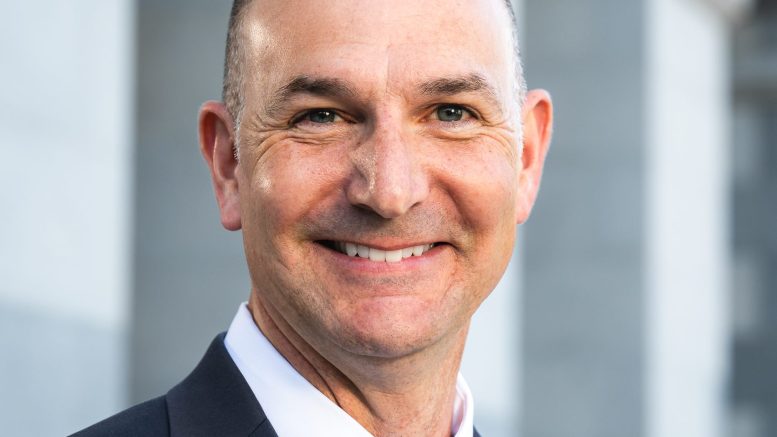
“That impacts everyone,” said Graham Knaus, CEO of the California State Association of Counties and a former county official in Placer County. “When people lose healthcare, they’re going to show up in the emergency room.”
To learn more, News & Review reached out to Graham Knaus for some answers.
Most people don’t understand how central counties are to California’s safety net. Can you walk through how the system works?
California is one of about 10 states where counties are the primary service provider. Nearly all safety net services—healthcare, food support, and many others—are delivered at the county level on behalf of the state.
That system works when funding is aligned across federal, state, and local levels. But when federal policy shifts, counties are where the impact lands. We’re responsible for making sure people actually receive services, regardless of what happens upstream.
H.R. 1 puts counties in a position where we are expected to deliver more complex services with significantly fewer resources.
At the federal level, H.R. 1 is framed as reducing spending. From your perspective, what is it really doing?
It’s primarily a cost shift—about $9.5 billion per year pushed onto counties in California.
But the bigger issue is what that means for people. About 1.4 million Californians are at risk of losing Medi-Cal coverage, and roughly 600,000 could lose food support.
When you remove that level of support, the effects don’t stay contained. They ripple through communities, through hospitals, and through the broader economy.
What happens when that many people lose coverage?
When people lose healthcare, they don’t stop needing care—they just show up in different places, primarily emergency rooms.
That leads to overcrowding, longer wait times, and increased strain on the entire healthcare system. It affects everyone. If you need emergency care, you’re now entering a system under much greater pressure.
In some cases, hospitals can’t absorb that level of uncompensated care. That creates a real risk of closures, particularly in more vulnerable communities.
Can you explain indigent care and the role counties play there?
Counties are the provider of last resort. When someone has no healthcare coverage and faces a serious medical issue, it’s the county’s responsibility to ensure they receive care.
The challenge is that we haven’t had to operate that system at scale for more than a decade. Since coverage expanded, much of that infrastructure—clinics, staffing, systems—no longer exists in the same way.
And this is not preventive care. People come in when conditions are severe, which makes treatment more complex and significantly more expensive.
So we’re being asked to rebuild a system that is both more costly and less efficient, without the capacity in place to do it.
When you break down the costs, where is the pressure coming from?
There are three main areas. Indigent care costs are estimated between $2 billion and $5.5 billion annually. Public hospital impacts are about $3.4 billion. And there’s roughly $600 million in additional administrative workload for eligibility.
That brings you to about $9.5 billion annually in costs shifted to counties, not including additional pressure in areas like behavioral health.
Are people losing benefits because they’re no longer eligible?
No. The vast majority still qualify.
What’s changing is the number of barriers. Eligibility checks are more frequent, and work requirements are added.
Most people receiving Medi-Cal and CalFresh are already working, often in unstable or hourly jobs. To meet these requirements, they may have to take unpaid time off, which can put their employment at risk.
So people lose coverage not because they’re ineligible, but because the system becomes harder to navigate.
Where do these costs land in county budgets?
They land on the General Fund—the portion of the budget counties actually control.
County budgets may look large, but only about one-fifth of that funding is truly discretionary. The rest is largely pass-through state and federal funding or tied to specific uses.
The General Fund pays for core local services—public safety, elections, homelessness response, and fire protection. Public safety is typically the largest share of that spending,
There’s very little flexibility. Costs of this magnitude can’t be absorbed without cuts. Even with some state support, counties would face difficult tradeoffs across those core services.
What are counties asking the state to do?
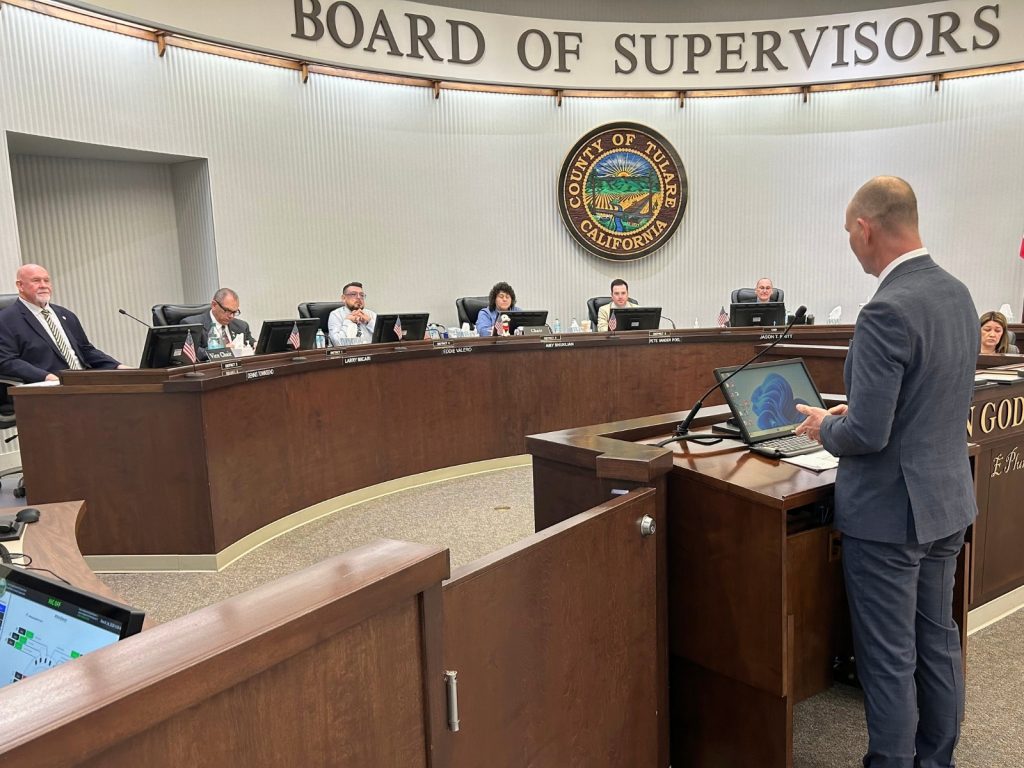
We’re asking for about $2 billion in the upcoming budget year.
That would help stabilize indigent care, support public hospitals, and invest in eligibility workers so we can keep people enrolled in programs they qualify for.
It’s not a full solution to a $9.5 billion problem. It’s about mitigating the most severe impacts—keeping hospitals open and maintaining core services.
On a practical level, should counties be hiring more eligibility workers?
Yes. The workload is effectively doubling under these new requirements.
But counties can’t simply hire more staff on their own. That depends on state funding. The current structure is a fixed allocation, and if counties exceed it, there’s no guarantee of reimbursement.
So if we want to keep eligible people enrolled, there has to be an upfront investment from the state.
What happens if the state doesn’t act?
Without a strong partnership with the state, the system comes under severe strain.
Hospitals are at risk of closing. Public safety and other core services will face deep cuts. Progress in areas like homelessness could be reversed.
This is a structural problem that requires a multi-year solution.
What’s the larger takeaway for Californians?
This is about whether we continue to protect the most vulnerable people in our communities.
Counties deliver these services, but we can only do that if the state provides the resources. If that partnership breaks down, the consequences affect every community in California.
Thank you for your time today, Graham.






Be the first to comment on "Q&A: Graham Knaus: Counties Face “Structural” Crisis Under H.R. 1"