
Lucas Immanuel’s earliest memory of playing video games is when he was a child, sitting with his brother and father, as the disc for Lego Star Wars played from their Wii console.
Immanuel and his brother’s controllers weren’t actually plugged in but this hardly mattered. A love for games would be instilled in him, leading him to start creating his own in 2020 as a sort of challenge between himself and a friend.
The 22-year-old UC Davis student is now intent on continuing to make games. After developing the skill over time, he is working on The Remake of the End of the Greatest RPG of All Time, a game influenced by retro Japanese role-playing games, with film elements.
Working alongside a team, Immanuel is communicating his vision that has only become better as the process has continued.
“That’s an incredibly gratifying experience and I am incredibly thankful that I’ve been able to do that simultaneously,” Immanuel says. “It is absolutely a lot of work to manage and get done. There’s a reason that there is the common saying in game development circles that every game is a miracle. … You’re fighting tooth and nail every day to get this thing from non-existence to existence.”
Immanuel is just one of many local independent game developers who are working to turn their ideas into a reality. Immanuel, who is originally from San Francisco, says although people often think of San Francisco or Los Angeles when they think of game development, Sacramento is an active hub for these designers.
The Sacramento Developers Collective is a prime example of this. The nonprofit organization was established in 2007 with the goal of connecting independent game developers with one another, allowing them to share resources to create their own games.
Through the Sacramento Developer Collective, people can find kinship over their shared love of games and bolster one another in creating their own.
Frank Lourence, a SDC board member, says even those who just have an idea for a game but not the skills or resources to begin creating one are welcome to join.
Members interact with one another through town halls, where they can meet in person. SDC also holds events like the Progressive Game Jams which allow members to collaborate with one another by forming teams to create games in a relatively short period of time. Over the course of six months, teams develop a game from start to finish, Lourence says, potentially hosting their games on online sites and forming working relationships with their teammates.
Daniel Todd pitched the idea for the game Kobold Tactics during a jam in 2022, a riff on Dungeons & Dragons by having players take on the role of a monster. Now, Todd is still working alongside the same team to develop the game, acting as program lead and artist.
Todd says he’s always enjoyed the ability to share the interactivity of games with others. He’s now able to share this experience through his own work through events where people have been able to playtest the game.
“I think actually seeing people play and enjoy the characters and the game in person and get real time feedback is just super awesome,” Todd says. “I think it’s been one of the most rewarding parts of it so far.”
One such event is the Capital Collective Showcase, an annual event hosted by SDC in May where individuals can play these games and also attend panels.
The showcase allows creators to gain direct feedback on their work, which Lourence says is crucial in the development space, especially when online feedback can quickly morph into criticism.
“When you’re talking face to face with the developer, it’s this back and forth conversation that truly helps them out,” Lourence says. “Not only are they meeting players, but they’re also meeting other developers in the area to pitch ideas with each other to develop the games they’re bringing and the next game that they might be working on.”
Player input can be important for indie creators who are making a passion project but are unsure how to market it.
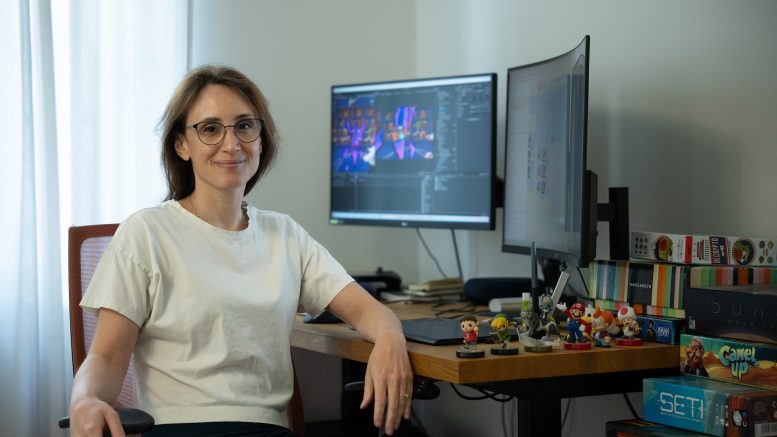
Lisa Aquilina, a game developer who has been working in the industry for 16 years, began developing Snap Quest after her partner encouraged her to pursue her own project.
Aquilina says creating games independently differs from her studio work because a studio designer is making something for an audience, not themselves. Company culture has designers keep metrics in mind or meet deadlines, which can be a hard lesson for creators to learn.
As she’s worked on studio games, she’s held onto ideas that she considered but could not implement, Aquilina says.
“I kept all those ideas, all those things that I know I love and I’m sure other people will love,” Aquilina says. “Now I’m going to finally do the thing that I want to do. I’m gonna do all the stupid things that I love. … I still have to make a game that I think other people will play but I’m hoping the things that I love will resonate with other people too.”
Many challenges can arise during the development process, including combating a sense of choice paralysis, where it can be hard to make choices when she has so many ideas to work with..
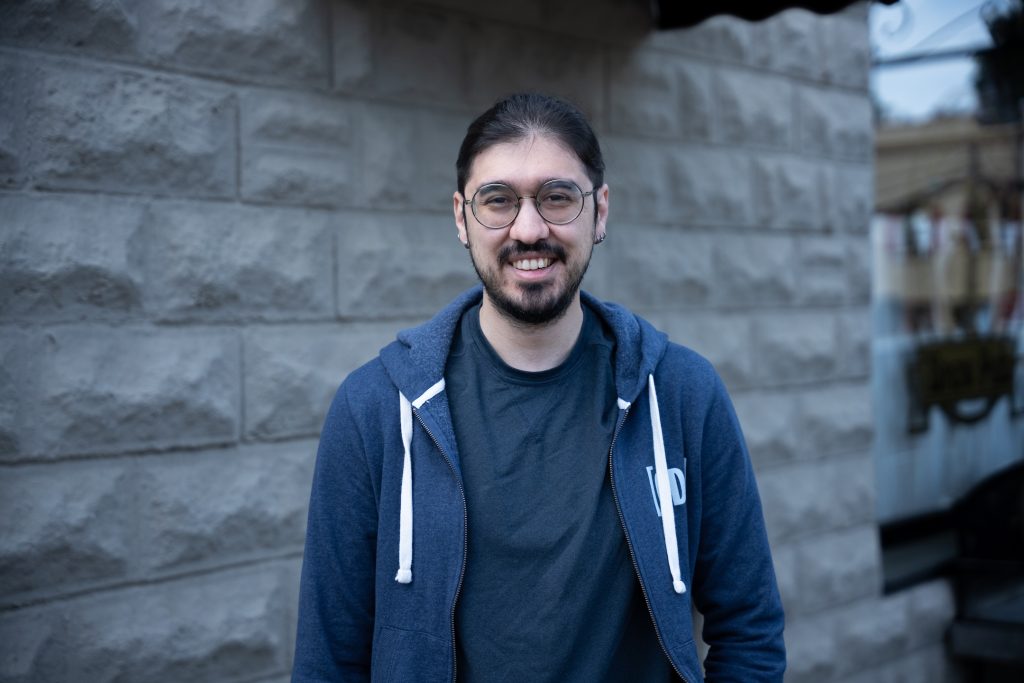
This was an issue that Brandon Rad, SDC vice president, dealt with for Board of the Kings, a tactical role-playing game inspired by chess which is now in early development.
“We’ve adopted a very ‘let’s get it done’ sort of mindset where we want to finish the game,” Rad says. “We all have things that we want to do in the game realistically. We’ve had to reduce scope a lot to kind of make the game manageable for us, since, when the scope is so big, we kind of get paralyzed. We have all of these things, and all of these things require even more things. So where do we even start?”
However, these challenges don’t deter the team from continuing to meet weekly for over three years now, carving out the time to work together in-between jobs and other responsibilities.
Regardless of whatever obstacles Immanuel encounters during development, he knows he wants to make games for the rest of his life. He says whether he’s employed by a studio or not, he will always create games.
“In some ways, it feels like trying to pile sand up to a certain height and the more you put on the top, the more things roll down and spread out,” Immanuel says. “That aspect of it is certainly frustrating, but 100% worth it. It is the most remarkably gratifying experience I’ve had in a long time.”
This story is part of the Solving Sacramento journalism collaborative. This story was funded by the City of Sacramento’s Arts and Creative Economy Journalism Grant to Solving Sacramento. Following our journalism code of ethics, the city had no editorial influence over this story. Our partners include Capital Public Radio, Hmong Daily News, Russian America Media, Sacramento Business Journal, Sacramento News & Review and Sacramento Observer. Sign up for our “Sac Art Pulse” newsletter here.





Be the first to comment on "Local video game developers work to turn ideas into digital realities"