
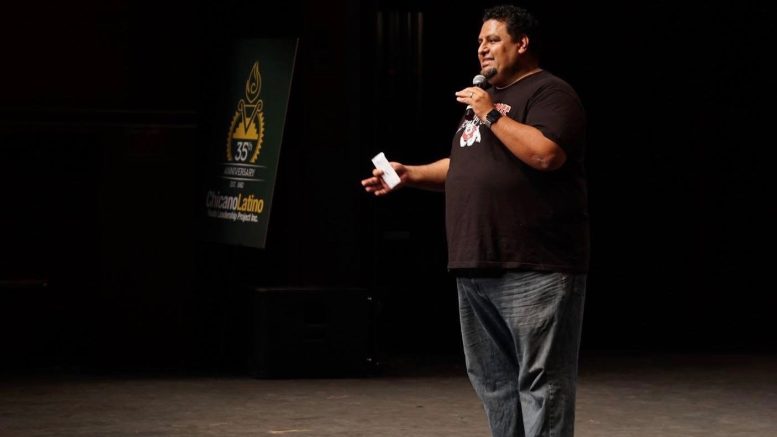
Late activist inspired a generation of organizers and built lasting grassroots power
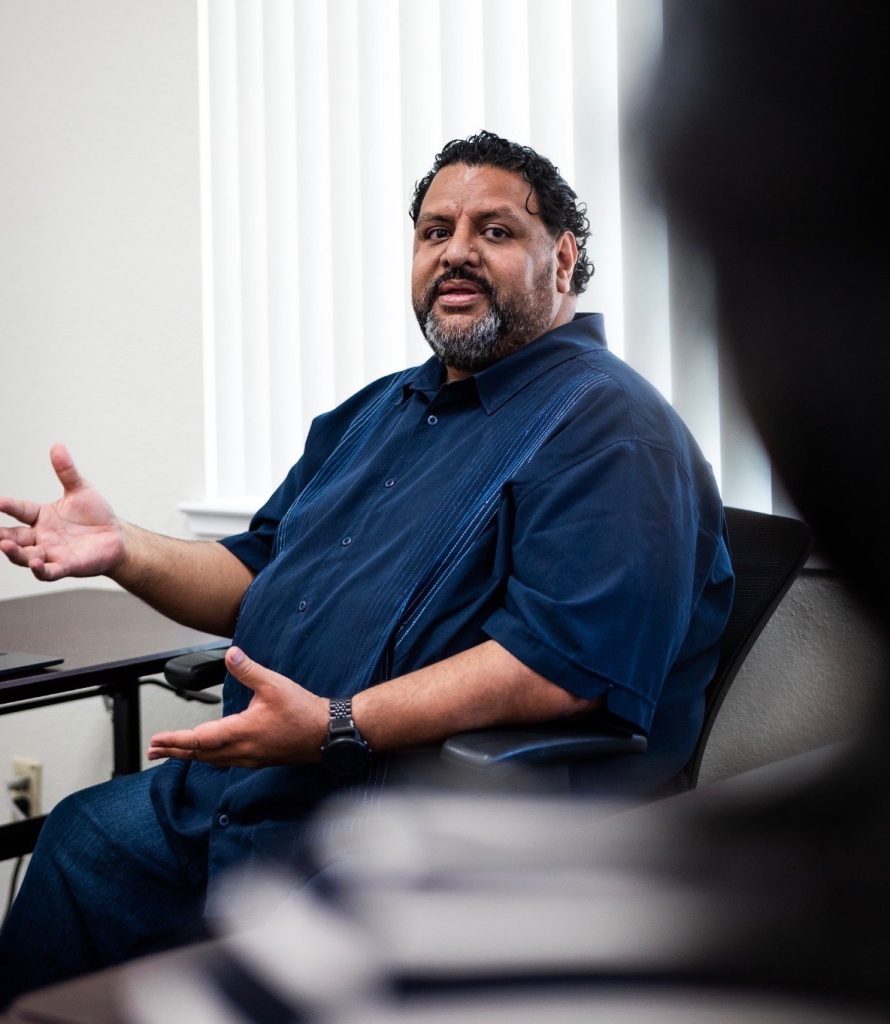
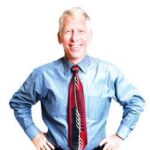
Pablo Rodriguez, the executive director of Communities for a New California (CNC) Education Fund and a central figure in efforts to expand civic participation in California’s rural and working-class communities, died on Dec. 8, 2025. His passing leaves a deep void among organizers, advocates, and the many communities he spent his life serving.
His death was sudden and unexpected. I’d been irritated that he had not texted me back the week before, not knowing that he was ill, let alone sitting at home with undiagnosed pneumonia. Upon hearing the news of his passing, that irritation was replaced by shock, followed by a profound sense of loss. That sentiment is shared by his family, his colleagues at CNC, and the multitudes of people who learned from him, worked alongside him, and trusted him.
Pablo was brilliant, funny, kind, and a great listener. He worked hard without posturing. In a political world not known for humility, those traits matter.
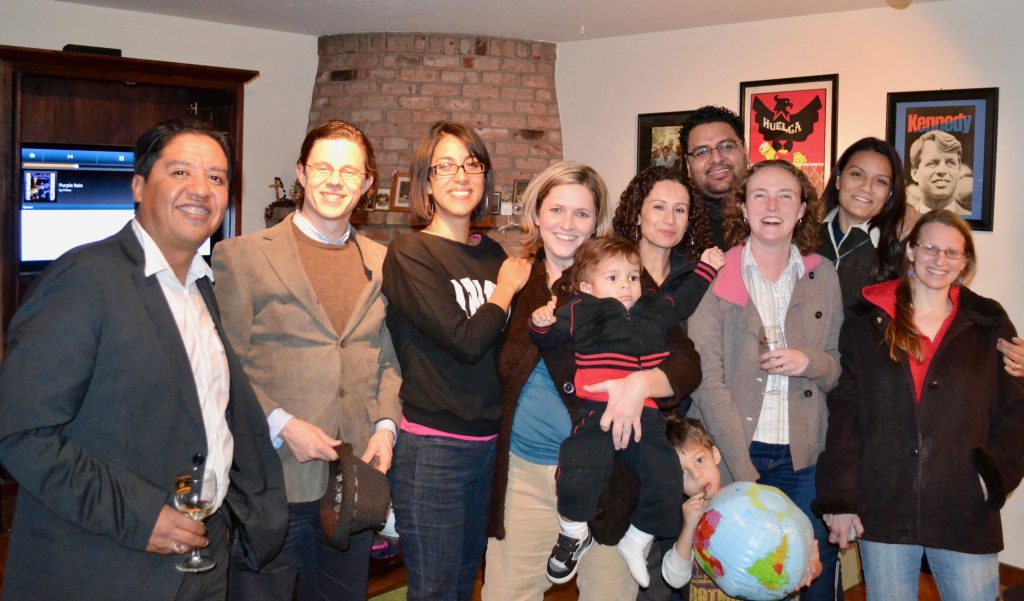
I worked with Pablo for many years through N&R Publications, the communications arm of the Sacramento News & Review. Together we collaborated on projects explaining CNC’s work, census outreach and Latino voter education. We’ve also worked with MOVE the Valley, a Central Valley organizing consortium that Pablo was a driving force in creating and that CNC helped anchor.
Through years of many long conversations, Pablo had become more than a colleague, but a true friend and someone whom I deeply respected. In addition to partnering on projects, we spent hours discussing politics, activism, social justice, and the state of the world. Over these many long conversations, Pablo patiently explained his political philosophy, which was rooted in listening, educating, community building and empowering others. I learned a great deal from him.
Pablo was a tireless advocate for the downtrodden and disenfranchised, a force for progressive change, and a highly effective organizer who inspired and mentored a generation of younger activists who are already carrying on his work. As significant as his passing is for those who knew him personally, the greater loss may be what he will not have time to finish. He was in the middle of building something rare: a durable model of community power rooted not in election cycles or media blitzes, but in year-round organizing—listening first, acting second, and building leadership from the ground up.
That philosophy did not come from a think tank. It came from lived experience.
Making the man: A rural childhood to a career in organizing
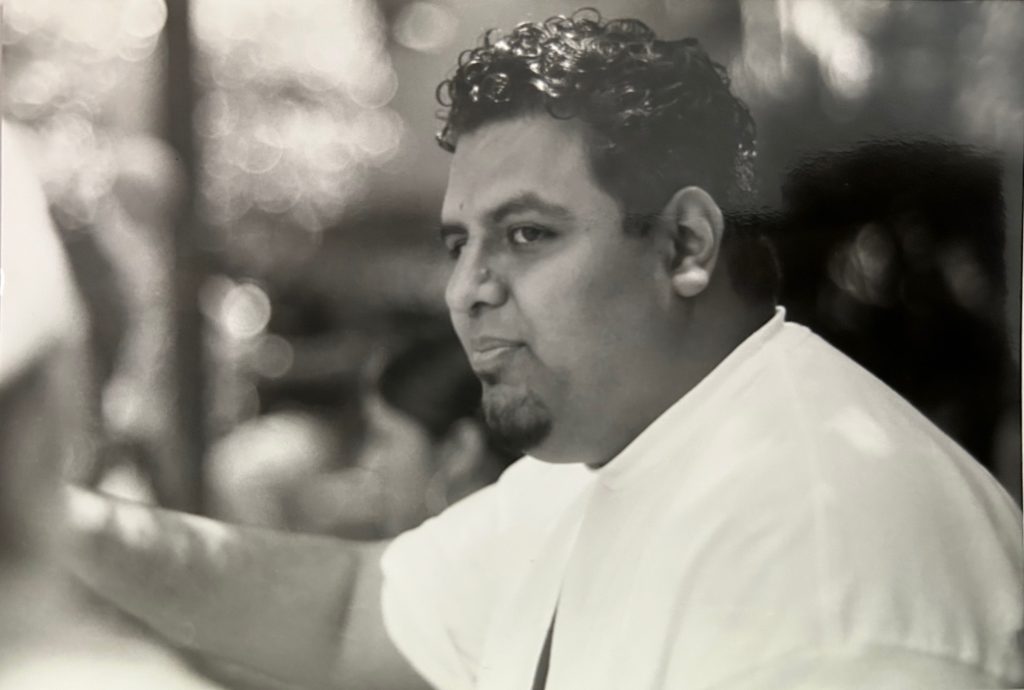
Pablo grew up in the small Central Valley town of Hilmar, raised by his mother alongside his three sisters. His childhood was shaped by the relative isolation and other elements of rural life, imbuing in him an early sense of responsibility.
His sisters remember him as quiet and unusually responsible. “It was in his nature—he was a caregiver,” says his younger sister Ruth, adding that Pablo was someone who listened first and spoke thoughtfully. When the family didn’t have a car and lived miles from town, Pablo—still in grade school—would walk several miles to get milk for his baby sister, Elizabeth. It was not something he complained about; it was simply something that needed to be done.
He was athletic in his younger days, playing football, basketball, and running track. Sports taught him discipline, teamwork, and how to subordinate ego to collective effort, lessons he carried with him his whole life. He was also a budding Renaissance man even then, an All-Star fullback who wrote poetry, did spoken word, and went to college with the intent of pursuing a career in the arts.
That path shifted after he joined a United Farm Workers Pilgrimage—a grueling 330-mile march from Delano to Sacramento—in the spring of 1994. The experience served as both political education and personal reckoning. What struck him was not only the cause, but the collective act: ordinary people committing time, energy, and physical effort to something larger than themselves.
That experience pulled him into organizing. His formal political education continued with the UFW, where he worked alongside Cesar Lara in the early 2000s. Lara was then serving as an administrative coordinator with the UFW, and continues to be active in community action, organizing and advocacy.
The UFW, co-founded by Dolores Huerta and Cesar Chavez, was more than just a labor movement, but one of the most influential organizing forces in American history.
Pablo and Lara spent months registering voters in communities long ignored by both political parties. Lara describes the UFW approach as disciplined and deeply relational: house meetings, one-on-one conversations, and identifying “connectors”—not formal leaders, but the people neighbors already trust. The goal was not just turnout, but transformation—breaking apathy by helping people experience concrete victories that proved participation mattered.
“Dolores Huerta always taught us that community organizing is not an art, it’s a science,” Lara said. “Pablo took that seriously.”
After working with the UFW, Pablo moved into political consulting in Sacramento, work that paid well and rewarded technical skill. He learned the math of campaigns: turnout models, targeting, messaging, media buys.
Then, he walked away.
“At that point, Pablo could have stayed in consulting and done very well,” Guzman said. “But he missed the community.”
Lara recruited Pablo to become CNC’s executive director after the organization’s first director, Martha Guzman, left for state service. The move came with a pay cut and less mainstream prestige. He understood how campaigns worked, and chose organizing anyway.
For Pablo, organizing was not a stepping stone to power: It was the point.
Philosophy in action: Communities for a New California Education Fund
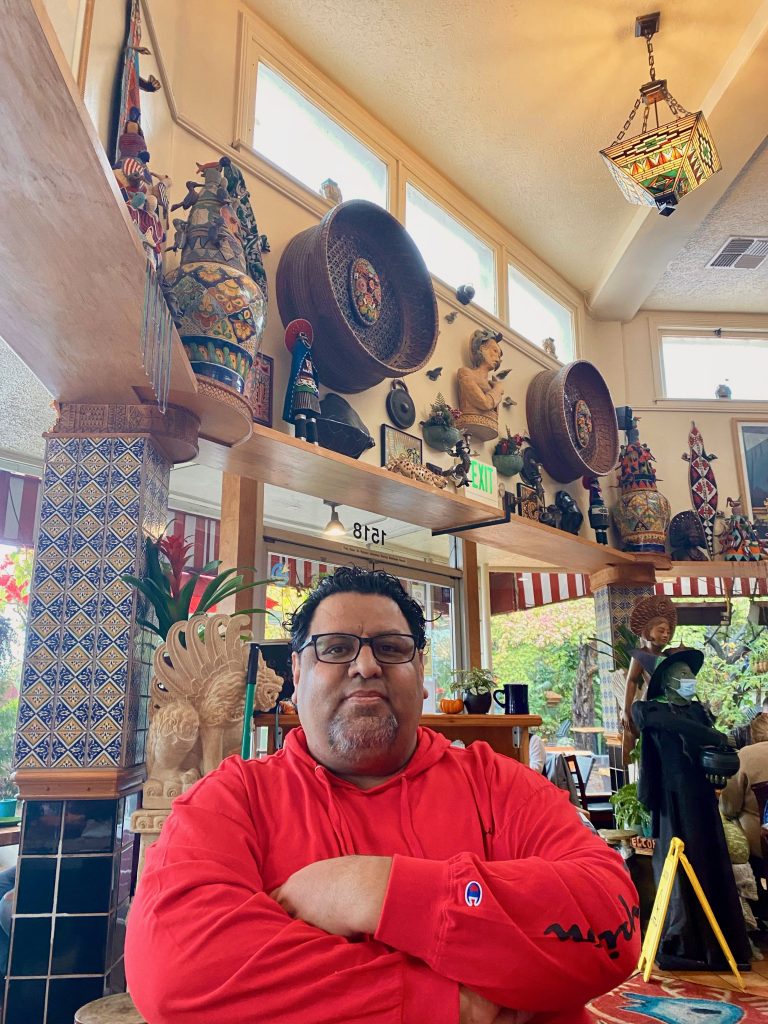
CNC is a nonprofit community organization focused on political empowerment, economic justice, and community advocacy in California founded in 2011. Its work is primarily focused on the San Joaquin Valley and Inland Empire regions of the state.
It emerged partly from a shared frustration: Pablo, Guzman, Lara, and others had spent years fighting for good policy, only to see communities disengaged and elected officials remain unaccountable.
“It didn’t matter how right the policy was,” Guzman said. “People didn’t feel it.”
At the same time, Voting Rights Act litigation revealed a deeper structural problem: at-large elections and distorted district lines ensured that large Latino and working-class populations had little real representation.
CNC was designed as a permanent presence—not a campaign shop that parachuted in every four years, but an organization embedded in communities year-round.
“The biggest disease in our communities is apathy,” Lara said. “And you don’t fix that with ads.”
CNC’s work begins with listening. Organizers engage citizens not to persuade, but to ask what people care about.
Hatzune Aguilar, an early CNC leader, described Pablo’s core strength as his ability to make people feel heard. “That wasn’t a tactic,” she said. “It was a value.”
Cesar Lara offered a small but telling example of how that value translated into power.
He recalled a meeting in Merced where he and Pablo were talking with local kids about what they wanted in their neighborhood park. At the same time, the city was running one of its standard “community engagement” processes around park improvements and the budget. Everyone expected the children to ask for big-ticket items—like a skate park or giant play structures.
Instead, the kids asked for the basics.
They wanted bathrooms open during reasonable hours. They wanted the drinking fountains to work. They wanted grass instead of a dry dirt lot. One kid explained that if he got thirsty, he had to bike ten minutes to a grocery store to buy a 25-cent drink. Another said that if he needed to use the bathroom, he had to ride all the way home and then come back because the park bathrooms were locked.
These were not abstract policy demands. They were practical needs that shaped whether kids felt safe and welcome in their own neighborhood.
What struck Lara—and what Pablo immediately understood—was the leverage in those “small” requests. Fixing a drinking fountain, watering grass, or unlocking a bathroom is minor for a city budget. But for the kids, it mattered. By backing their demands and helping them show up at a city council meeting, CNC put elected officials in a simple position: meet the request, or explain to a bunch of children why the city couldn’t manage to keep a lawn green or a bathroom open.
The kids won. The park improved. And just as important, the community saw that organizing worked.
That victory mattered far beyond the playground. Once people experience a win, their sense of what is possible changes. Today it’s park maintenance, tomorrow it’s forcing landlords to make repairs, fixing broken streetlights, expanding youth programs, or demanding safer streets. By listening first and then backing people up, CNC helps residents set the agenda instead of reacting to one handed down from above.
The playground story also explains why organizing and voting are inseparable. A working drinking fountain can matter more than a hundred TV ads. Participation builds confidence. Confidence builds involvement. In the process, people become organizers, advocates, and voters for the next issue.
Drawing from the UFW, Pablo and Lara wanted to teach people how to play political chess—not as spectators, but as participants. At face value, it’s an unfair game: Corporations and special interests have the money, the consultants, and much of the institutional power—the queens, rooks and bishops—while working-class communities are treated as pawns.
But that framing misses the most important fact: there are over 20 million voting-age Californians without a college degree. When organized and acting together, that many so-called pawns are not weak or disposable. They are decisive.
That approach—starting with the basics, listening first, and proving that change was possible—was not abstract for Pablo. It came directly from his own life.
Strength in unity: The importance of community building
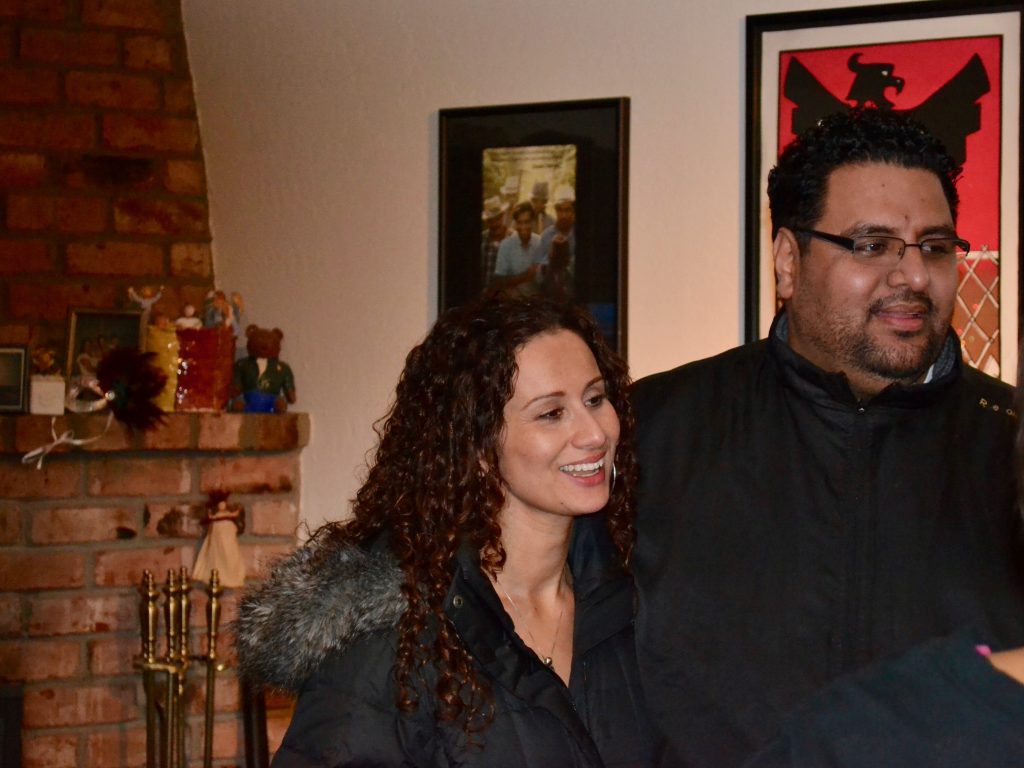
Pablo understood that lasting change rarely comes from acting alone, but from bringing people and organizations together around shared purpose and experience.
With this understanding, he was a founding member of the Fresno County Civic Engagement Table, a coalition of grassroots organizations working together to increase civic participation, voter education, and engagement in historically marginalized communities in Fresno. This coalition later evolved into MOVE the Valley (the MOVE stands for Mobilize, Organize, Vote, Empower).
MOVE is made up of CNC, Faith in the Valley, Community Water Center, Hmong Innovating Politics, and the Jakara Movement. Each member organization brings deep credibility within its own community—Latino, Sikh, Hmong, and faith-based networks—and is committed to a shared vision of multiracial, working-class power in the Central Valley. The structure allowed groups to organize effectively while sharing resources, strategy, and long-term goals. MOVE offers a model for how sustained investment in community-based organizations—rather than short-term campaign spending—can build a durable grassroots movement and produce real change.
Mai Thao, executive director of MOVE the Valley, describes Pablo as “the backbone” of the effort.
“Rather than serving as a gatekeeper to this work, he chose to work alongside partner organizations,” she says. “He fostered genuine collaboration. Pablo was never content with comfort or the status quo. He pushed us to go beyond our perceived limits and realize our fullest potential for change across the Central Valley.”
N&R Publications has done communications and consulting work for MOVE, which gave me the opportunity to see the impact firsthand. Last August, the coalition launched its 2025 Joint Canvassing Program, bringing together volunteers from all its member organizations to hit the streets, knock on doors, and to directly engage voters and ask them to complete community assessment surveys.
After hours of door-to-door canvassing in near-100-degree heat in Fresno, I expected exhausted volunteers. Instead, they were energized. What struck me most was not what they said to residents, but what residents said to them. People felt heard.
The California Endowment is a major statewide foundation focused on health equity and long-term, community-led change, and it has been a strong supporter of CNC’s work.
Following Pablo’s death, the Endowment described him as “a trusted partner, brilliant strategist, and beloved mentor,” crediting him with helping build year-round civic power across the Central Valley and Inland Empire and strengthening coalitions that brought in voters long ignored by political parties.
Jonathan Tran, the Endowment’s director of communications and special projects, shared a more personal reflection with News & Review.
“Executing a successful Census, helping to change the electorate in areas often ignored by political parties, and building a new generation of leaders in the Central Valley and Inland Empire would not have been possible without Pablo as the primary architect,” Tran said. “In our private conversations, Pablo often talked about how the passage of Prop. 187 galvanized an entire generation of Latino organizers. In that same way, Pablo helped galvanize a new generation of organizers and power builders who will carry this work forward. He will be missed terribly.”
The problem with political funding: Late-game push versus substantive support
Over the years, Pablo and I kept coming back to the same conversation. We agreed on a basic truth: The best time to reach people is not the last few weeks before an election when voters are flooded with information and, often, misinformation. The real work is steady and never stops—ongoing communication, organizing, outreach and substantive support that helps people understand the issues, see their own power, and stay engaged between election cycles.
Most political money instead goes to mailers, TV ads, and last-minute digital blasts, especially in the final stretch of a campaign, when fear and spin are cheapest to sell and hardest to fact-check.
The logic is familiar. Campaigns want efficiency, so well-paid consultants focus on likely voters in close races. They ignore people who, based on past behavior, “don’t vote,” and they write off entire neighborhoods that don’t fit the target map. In the short term, it can sometimes be effective.
But it also sends two negative messages—loud and clear.
First: We only care about you if you can help us win right now.
Second: We’re not here to listen to you, or work with you, or build anything with you. Instead, we’ll drop emotionally charged, manipulative messages on your doorstep and move on.
That’s the part that always felt so painful—and so shortsighted. You could watch billions flow through liberal campaigns while real community organizing scraped by. It was like watching campaigns reach for a short-term sugar rush—fast, stimulating, and ultimately empty—while starving the slow, durable work that actually builds power.
And yes, maybe that sounds cynical. But it’s hard to ignore one more reality: ad-driven campaigns also generate commissions and fees. When the system rewards buying media, the system keeps buying media.
It’s a cycle that sadly continues, and one that Pablo and I spent years ruminating over.
Self-sacrifice: The human cost of commitment
What often gets lost in conversations about organizing is the toll it takes on the people doing the work. The constant campaigns. The stress of funding that never quite matches the scale of the need. The emotional weight of carrying other people’s urgency, anger, and hope, day after day. Pablo felt all of it.
There were moments when he was exhausted and burned out. After election cycles, he would talk about how physically and emotionally depleted he felt. He suffered from diabetes. He struggled with his weight. He pushed himself hard and did not always take care of his own health. After particularly grueling stretches, he would take late flights south and camp out in Mexico, trying to recover from the intensity of the work.
He even talked, at times, about quitting.
Not because he stopped believing in the mission, but because the cost was real. The work demanded sacrifice—less money, more stress, fewer safety nets—and it never stopped.
But he didn’t quit.
He kept going, even when the system made it harder than it needed to be. Even when the funding flowed to ads instead of organizers. Even when the wins were incremental and the setbacks constant.
That persistence was not romantic. It was disciplined. It was exhausting. And it was part of what made Pablo who he was.
Pablo’s legacy: The fight continues
CNC’s work will continue into the future, guided by Pablo’s legacy. Since his passing one of his proteges, Melissa Vargas, has stepped into the role of interim executive director.
“It is difficult to find the words that fully capture the depth of pain felt by the CNC team and our extended family, knowing that Pablo will not be with us for another conversation, strategy session, or campaign,” Vargas says. “For many of us, Pablo was far more than a leader or a fellow organizer, he was a trusted friend and mentor.
“Pablo lived his vision through CNC. As a result, many of our leaders and team members began their journeys as volunteers or interns whom he coached, challenged, and uplifted. That enduring legacy will live on as CNC continues to move forward with strength and purpose into 2026 and beyond. Our year-round programming remains the foundation of our work, and our data-driven strategies will ensure we continue to organize and authentically engage families and neighbors across our communities.”
As CNC’s first executive director, Guzman, says: “The best way to honor Pablo is to keep doing the work.”
The Democratic Party is in the midst of a reckoning. Working-class voters without four-year college degrees—once a core constituency—have drifted away, disillusioned by politics that feels transactional and distant.
Pablo believed the problem was not messaging, but structure. People disengage when they feel invisible. Organizing, done right, restores agency.
Watching CNC organizers at work reminds me of earlier movements—the civil rights movement, the farmworkers, and the anti-war movement—where ordinary people were asked to participate at real personal cost.
In college, my political education came from sociologist Dick Flacks, one of the founders of Students for a Democratic Society (SDS). He once told me that if you ask ten people to make a real sacrifice for their beliefs—like taking a political job for less pay, going to a demonstration where you could be arrested or hurt, or losing your job for being a whistleblower for a greater cause—nine will say no. One will say yes.
“With that one,” he said, “you can build a movement.”
Pablo understood that. He said, “Yes!” and continued to ask others the same.
And, he built a movement.
Rest in Power, Pablo.
Thanks Jeff for the powerful and heartfelt tribute! Rest in Power brother Pablo! La Lucha Sigue!!
A beautiful tribute for a beautiful man.
Pablo was brilliant and unassuming—a deep listener who became an essential part of my foundational learning as Executive Director at Faith In The Valley. I had deep respect and genuine love for Pablo.
He taught me so much about the basics of politics and organizing, always with patience and never talking down. When questions arose that stretched beyond my knowledge or expertise, Pablo would artfully step in—masterfully answering, not to overshadow me, but to support me. He did it out of respect and love, and I always knew exactly what he was doing.
He never took credit. Instead, he would quietly say, “You would have answered the right way.” That was Pablo—humble, generous, and deeply committed to lifting others as he led.
Rest in power, Pablo Rodriguez.
You were a giant in the movement, and your legacy lives on in all of us you poured into.
Thank you for writing this beautiful eulogy. Pablo was a brilliant force to be reckoned with. I am so incredibly sad to learn of his passing that I know will leave an immense void in the communities he worked so hard for and with, as well as an unimaginable emptiness with his family. Truly devastating but your tribute that told his story so well was uplifting — he deserves that. Pablo Rodriguez leaves a legacy. I will miss his fighting spirit deeply.
Pablo was our next door neighbor. He played football at Hilmar High and we were always there to cheer him on. On Senior night while playing football he was escorted by his mom who was so very proud of him.it was a terrible shock to find out about his passing unexpectedly. He will be missed greatly.