After decades of living without clean drinking water, mother-daughter activists make headway in East Orosi
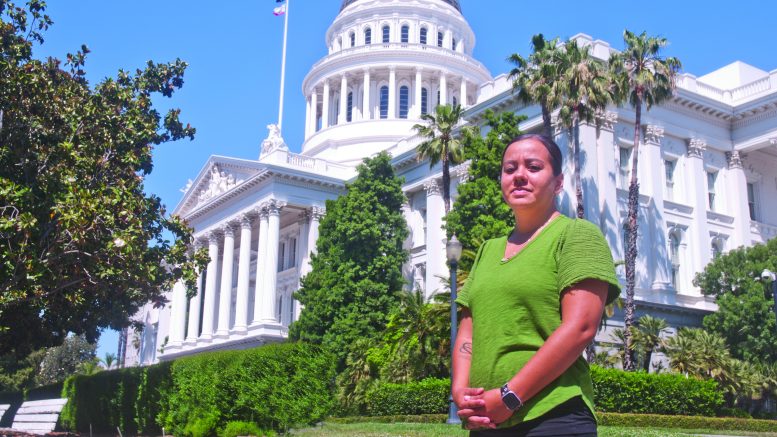
Miriam Sanchez grew up watching her mom, Bertha Diaz, fight for clean drinking water in East Orosi, their Central Valley hometown. Now Miriam is on the front lines of that fight—and the activist mother-daughter team are hoping to see progress at last.
Set in the orange groves of Tulare County, East Orosi is a farming community of around 700 residents. For decades, Sanchez says, their drinking water has been contaminated by dangerous levels of agricultural nitrates seeping into the soil.
“Everybody knows that our water is not drinkable here,” she says. “It’s only used for cleaning and irrigating outside. For drinking, my family depends on six five-gallon bottles delivered every two weeks.” The bottled water is provided through a regional program paid for by polluters.
“This situation is representative of how small rural water systems struggle. Often what is missing is the political will to get things done.”
Maraid Jimenez, Communications Manager, Community Water Center Action Fund
East Orosi is not alone. Four hundred other water systems serving 843,680 people in California fail to supply safe water, according to current statistics from the State Water Resources Control Board.
While folks in East Orosi are lugging five-gallon bottles, their neighbors in the adjacent Orosi Public Utilities District have clean water flowing from their taps. In 2020, the Water Board ordered the two water districts to consolidate, which would solve East Orosi’s problems. Despite the order, inertia and disagreements between the two local districts have stalled the consolidation.
“This situation is representative of how small rural water systems struggle,” says Maraid Jimenez, communications manager of the Community Water Center (CWC) Action Fund, a statewide clean-water advocacy group based in Visalia. “Often what is missing is the political will to get things done.”
Now, change is in the wind for East Orosi.
After years of attending water meetings as an outsider looking in, Sanchez was recently appointed to the board of the East Orosi Community Services District. She joins two other community activists on the board, Carlos Sanchez and Cynthia Ruiz. The three are shifting the momentum toward solving their town’s previously intractable problems.
“It’s so important to have community partners on these water boards,” says Jimenez. “They personally understand the need to be able to turn on the tap and use that water to drink, to cook, and to bathe.”
Three community members—Angela Ruiz-Alvarez, Nancy Cerda Serna, and Serafin Brito—were elected to the Orosi Public Utilities District Board last November, constituting a majority on that board to work with the neighboring East Orosi panel.
Jimenez praised Sanchez for her energy and dedication.
“Miriam is a great point of reference for what it means for these activists to be involved,” she says. “Miriam is so willing to learn and she wants to be part of the solution.”
Sanchez, 34, remembers tagging along as a child when her mother participated in the AGUA Coalition (la Asociación de Gente Unida por el Agua, or the Association of People United for Water). Now her own children watch her in action on the East Orosi Community Services Board.
“My mom is proud of me,” says Sanchez. “I guess activism runs in the family. My 9-year-old daughter asks me, ‘Is there a water meeting today? I like going!’ I tell her it’s really important for our community to have safe drinking water so our future generations don’t have to worry about it.”
For more information about Community Water Center Action Fund and the ongoing fight for clean water, visit www.ommunitywatercenter.org.