
By Dan Bacher
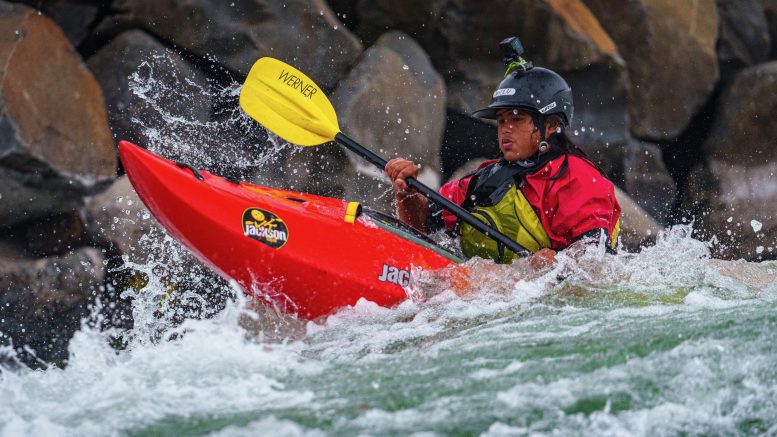
On July 11, several dozen indigenous youth from the Klamath Basin and beyond completed a historic 310-mile, month-long source-to-sea “first descent” of the recently undammed Klamath River. They began their journey in Oregon and ended at the mouth of the river on the Yurok Reservation.
Rios to Rivers, a nonprofit conservation group, observed that “as the youths approached the sand spit adjacent to the Klamath’s mouth in their bright-colored kayaks, tribal elders, family members, friends and supporters waved and cheered them on.”
The moment was a long time in the making.
“I feel so proud to have completed this trip, and am feeling grateful for the support of my family and the fact that I got to honor my grandma’s legacy in her fight for dam removal,” said 18-year-old Ke-Get Omar Dean V, a member of the Yurok Tribe. “We got to complete this journey because of the people that came before us and ensured a free-flowing river.”
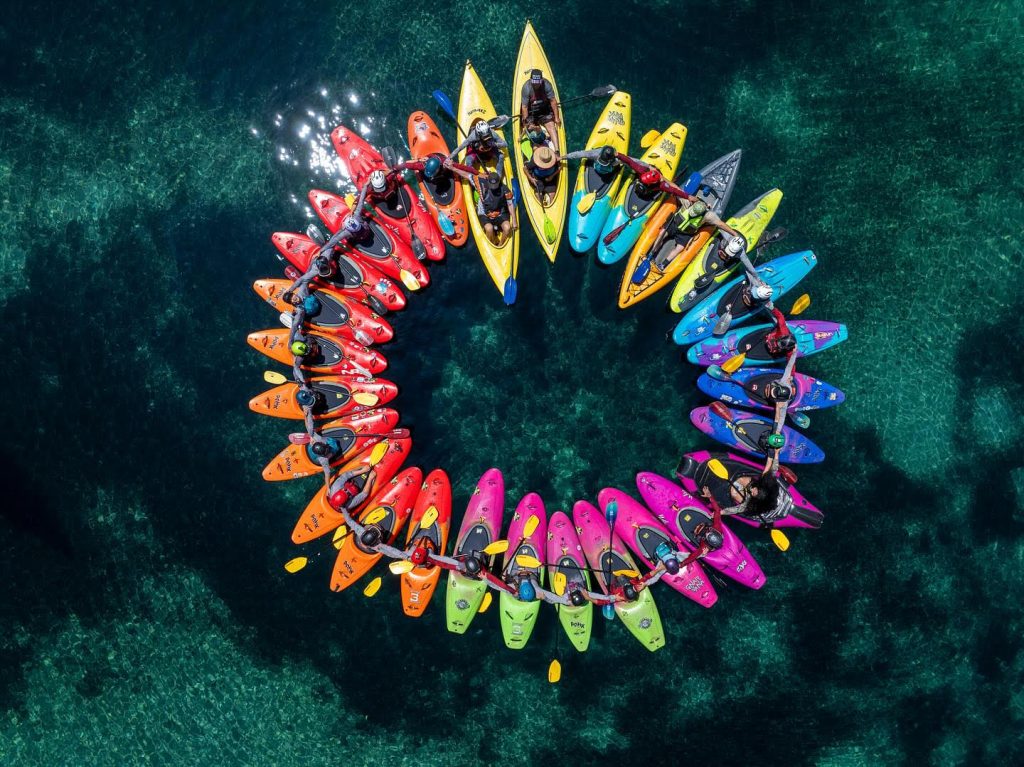
The young paddlers trained up to three years to run whitewater with kayak instructors from the Paddle Tribal Waters program, which is operated by Rios to Rivers. The program includes teens from the Klamath, Yurok, Karuk, Quartz Valley, Hoopa Valley, Warm Springs and Tohono O’odham tribes.
Four hydroelectric dams owned by PacifiCorp had blocked the river for over a century, preventing once-abundant salmon and steelhead runs from ascending into their native habitat.
The last of those dams was demolished in 2024, completing the biggest dam removal in history — and opening up hundreds of miles of habitat to Chinook salmon, coho salmon and steelhead for the first time in over 100 years. The dam removal campaign was spurred by indigenous activists, tribal leaders, and commercial and recreational fishermen. Those groups, along with other environmental activists, were outraged over the Klamath River fish kill in September 2002, when over 38,000 salmon perished in low, warm water conditions on the lower river in the Yurok Indian Reservation.
With the dams removed, the young kayakers set out June 12 to run a river that was now free-flowing after a 20-year battle.
“During the final few days of the journey, the paddlers were joined by other Indigenous youth and representatives from the Snake River and other river basins in the U.S., and members of kayak clubs and indigenous communities in Chile and Bolivia and as far away as New Zealand,” Rios to Rivers noted.
“Dam removal has shown us that we can accomplish anything, even if it is hard,” said 15-year-old Melia McNair of the Klamath and Modoc tribes. “This trip was long but has shown me how strong I can be. I feel grateful for my ancestors and everyone who has been helpful. I am proud to be part of this experience.”
Autumn Goodwin, an 18-year-old member of the Karuk Tribe, had similar reflections.
“Since it has ended it has been mixed emotions, joy to have completed the journey, and sad that this moment is coming to an end,” Goodwin shared. “But in a way, it is just the beginning. It is a bittersweet moment.”
A daylong public celebration featuring live music, cultural demos, youth speakers and food trucks was held in California’s nearby town of Klamath on July 12.
On the following day, the first-ever Klamath River Accord was signed by indigenous youth, tribal leaders and allied organizations from multiple river basins around the world – including Chile, Bolivia, New Zealand, China, and the United States – as a call to action for dam removals and a halt to new construction of dams across the globe. The Klamath River Accord was the culmination of a two-day “Global Free Rivers Symposium” held at the mouth of the Klamath River, following the tribes’ source-to-sea descent. Conceived of, and written by, a gathering of Indigenous youth, the accord’s preamble “recognizes these dam removals on the Klamath River serve as a model for future climate resilience efforts and acknowledge the urgent need to protect the world’s remaining free-flowing rivers, ensuring that the mistakes made on dammed rivers are not repeated elsewhere.”
“Seeing with our own eyes what is possible on the Klamath River fills us with energy,” said Ashly Jara Castro, a 15-year-old member of the Mapuche-Pehuenche community and youth leader in the Kayakimün organization, who was also a member of the Chilean delegation to the Global Free Rivers Symposium.
As a nonprofit, Ríos to Rivers says its mission is to inspire “the protection of rivers worldwide by investing in underserved and Indigenous youth who are intimately connected to their local waters and supporting them in their development as the next generation of environmental stewards.”

Be the first to comment on "Indigenous youth complete first descent of undammed Klamath River, reaching the sea"