

Four candidates vie for a less-than-famous Sacramento County seat
Deborah Ortiz put it best when saying that most Sacramentans concentrate on what the city council and mayor do, whereas the county board of supervisors has been “somewhat hidden, somewhat bureaucratic.”
“The board of supervisors is relatively invisible,” the former city councilmember recently said.
That could be because a county supervisor must negotiate the procedural and wonky world of managing infrastructure, public utilities, housing, code-enforcement and homelessness.
In that sense Sacramento County’s first supervisorial district is unique because it heavily overlaps with the city limits, giving this inner core of neighborhoods dual representation of the City Council as well. The Board of Supervisors in this district, therefore, must enact policies that work both within the city limits and outside of them.
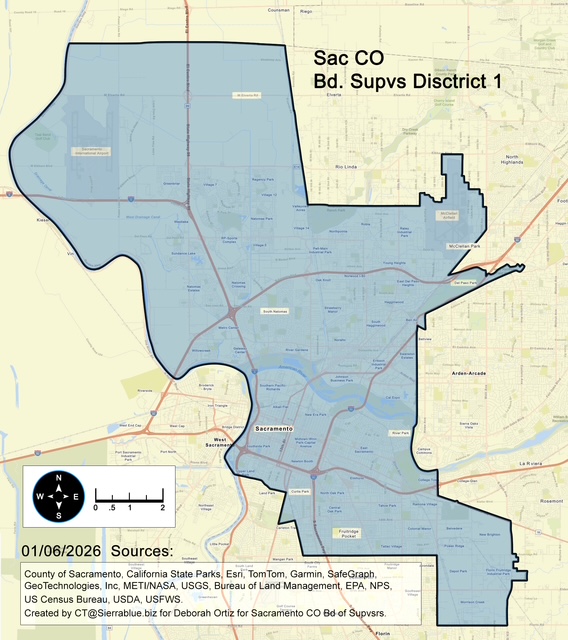
While small in geographical size, District One is the second largest by population. It also represents the unincorporated areas around McClellan Business Park, the Sacramento International Airport and some pockets north of Florin Road.
As voting in the June Primary gets underway, the following primer introduces all four candidates for District One, explaining their reasons for running and the issues they want to prioritize. Our information was compiled from viewing the candidates’ own websites and from an extensive interview conducted by the Environmental Council of Sacramento (ECOS).
If there is no majority winner in the June 2nd primary, a runoff will be held in the November 3rd, 2026 general election.

Dr. Flojaune Cofer:
“I’m running because I think this moment needs more than just someone who has a history of being elected. It requires us to have some courage and clarity as well as some expertise. I come from a public health background. That means I have a really deep understanding of some of the environmental issues that the board faces, and how we balance those with the economic needs in our region. It’s not ‘Do we build or do we protect the environment?’ It’s ‘How do we build while protecting the environment?”
Dr. Cofer’s parents were both middle-school teachers. She credits them with instilling the idea of service to the community. At the age of 11, she lost her father to congestive heart failure. As a smoker, he was a victim of the tobacco companies and their practice of marketing menthol cigarettes in African American communities. It is one of the reasons why Dr. Cofer went into public health as a career.
She attended Spellman College in Atlanta and earned both her Master in Public Health and PhD in Epidemiology from the University of Michigan.
Dr. Cofer worked at the California Department of Public Health for six years as an epidemiologist. While there she helped to decrease infant mortality statewide by 14% and to expand women’s health coverage under Obamacare with no copays.
Her committee service includes Sacramento’s Active Transportation Commission, the Mayor’s Commission on Climate Change, the Sacramento County Sheriff’s Outreach Community Advisory Board, and the Measure U Community Advisory Commission.
In Dr. Cofer’s own words: “As supervisor, I’ll work with the board and leaders across the county to determine how we can spend our resources effectively to achieve our top priorities: reduce homelessness, expand affordable housing, improve public safety, and launch a Green New Deal to create thousands of great jobs while protecting our climate and improving our infrastructure.”
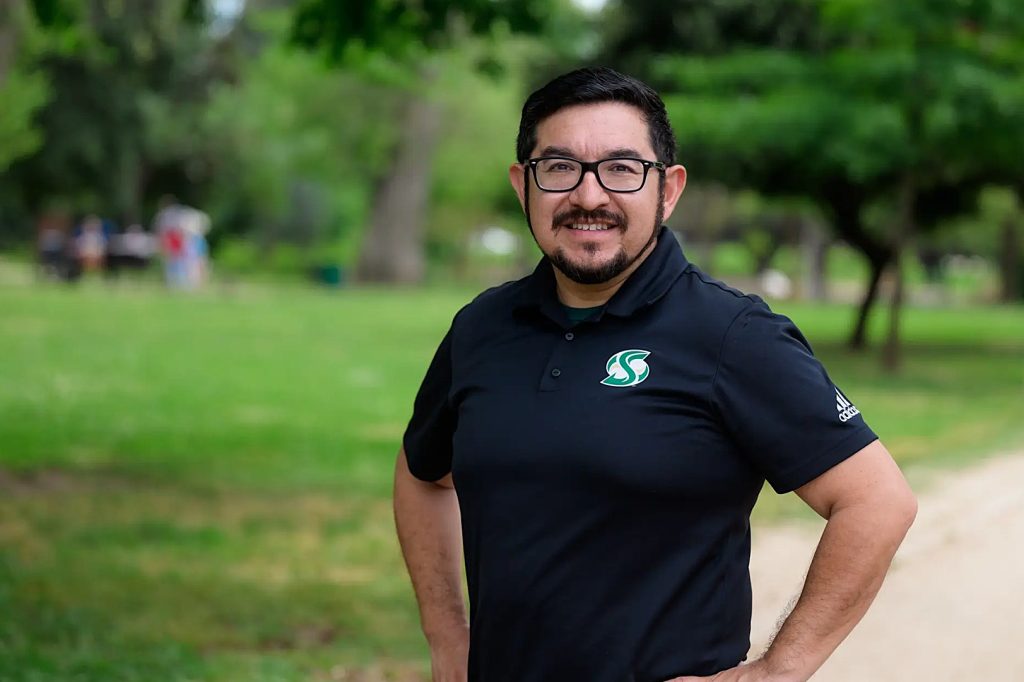
Eric Guerra:
“I never thought I would run for public office. I volunteered with my neighborhood association for a tree-planting event, and that’s when they suck you right in. I got involved in my neighborhood, planting trees and making sure that we were addressing what I knew was an issue already facing a lot of South Sacramento was the lack of trees and how hot it can be. I decided to run for Council, and why I am running for County Supervisor is to make sure that we are doing everything we can to protect, not only for today, but what’s for the next generation.”
Guerra grew up in Esparto, California, laboring as a farmworker since the age of 5. He earned a Bachelor’s degree in Electrical and Electronic Engineering and a Master’s degree in Public Policy and Administration from CSU Sacramento.
A Sacramento resident for 30 years, Guerra has represented District 6 in the Sacramento City Council since 2015.
He has also served in several community capacities, including the CSU Board of Trustees, president of the Tahoe Park Neighborhood Association, chair of the Sacramento County Planning Commission, and president of the Sacramento State Alumni Association.
One of Guerra’s most passionate issues is homelessness. He helped convert vacant lots with homeless camps into lasting housing, like the 700 affordable units on various Stockton Blvd campsites. He also worked to expand the St. John’s Women’s Shelter.
On housing Guerra helped get new homes constructed for seniors, students, and working families, including 3000 units of affordable student housing near Sacramento State.
In Guerra’s own words: “I’m running for supervisor to realize that potential, where our streets are clean & safe, people can afford to live in great neighborhoods, and we have roads and transportation options that work. I hope to use my leadership as a supervisor to make sure we treat each other as a community, because we are stronger together.”
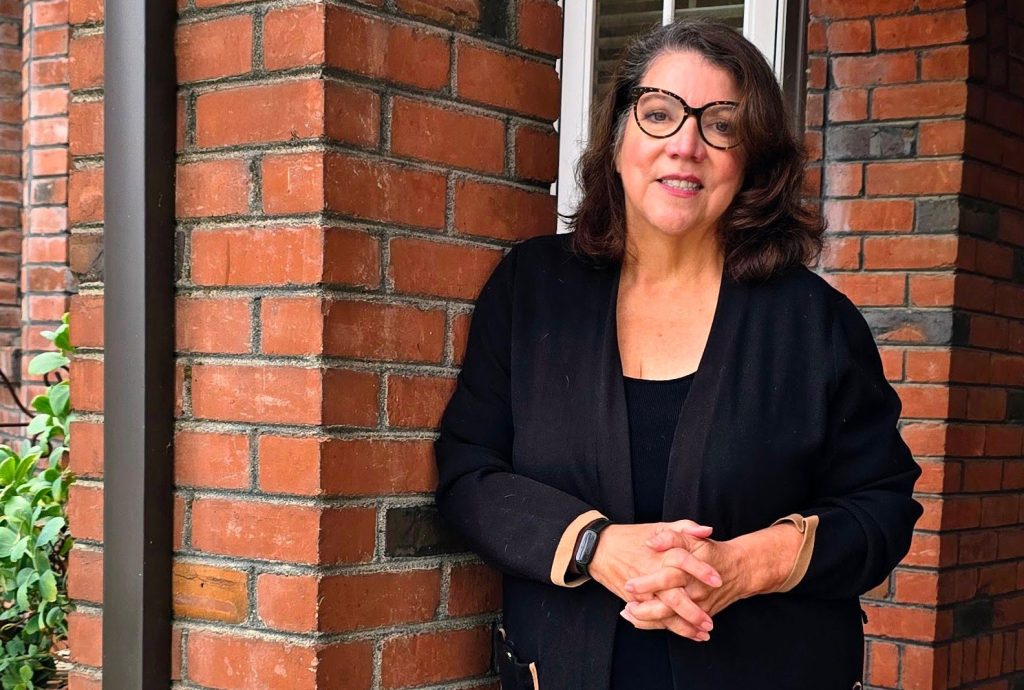
Deborah Ortiz:
“Like many other people I’m watching the horrors of what’s happening on the federal level, and I’m cognizant of how bad it’s going to be at the county level in the area of health and human services, my passion. The county’s primary mandate is health and human services, it’s embedded. I looked at the makeup of the board of supervisors and knew that I could bring a compelling voice and advocacy for people who grew up like me on public assistance, food stamps and public housing. That was my motivation, and I feel passionately about it. I absolutely have more to give.”
A Sacramento native, Ortiz’ parents were farm workers who eventually became state workers. She attended UC Davis as an undergraduate and earned her Juris Doctor degree from McGeorge Law School.
Ortiz was first elected to the Sacramento City Council in 1993. In 1996 she was elected to the state Assembly and served one term before being elected as a California State Senator in 1998.
A major advocate for Oak Park, Ortiz fought to hold landlords accountable for blighted properties, easing reporting against illegal dumping, moving gun stores away from schools and getting US Bank to open a local branch, the neighborhood’s first in 30 years.
Ortiz is passionate about public health. She feels the Board of Supervisors has been underfunding public health “even in good times.” She sees a disaster coming with the federal decision to cut healthcare funding and wants to help facilitate a local solution. Ortiz sees homelessness as a long-term problem that takes time to honestly solve.
In Ortiz’ own words: “I think there is some willingness of some individuals on the board of supervisors to begin a thoughtful, serious, collaborative conversation with the City of Sacramento on homelessness. It’s essential. We no longer have the luxury of not working on this together.”
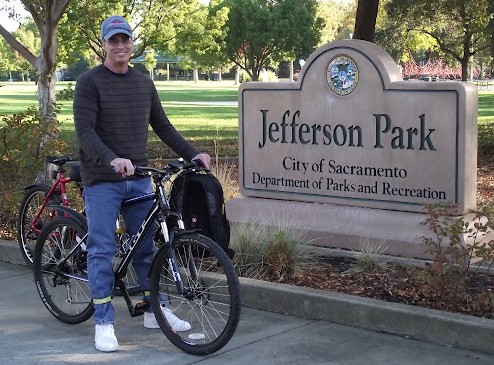
Tim Riley
“I’m running for county supervisor because the stresses in my local environment are becoming more unbearable and the more I investigate the more I realize it’s our leadership’s lack of action that’s causing the extra stresses. I moved to Sacramento County in 2001 from Miami. Miami’s population outgrew its infrastructure, and it became impossible, very stressful to live there.”
A graduate of the CSU Sacramento Accounting School, Riley works from his South Natomas home as a programmer of databases for the Everglades National Park.
Riley’s top three priorities are solving the homelessness problem, building a bigger jail and eliminating the tuition at our local community colleges. His passion, however, centers around promoting more open space like bicycle and pedestrian culture that the American River Parkway offers.
While Riley has served as a homeowner’s association board member, he feels his skills are better suited for solving the kinds of local government problems that career politicians tend to kick down the road.
In Riley’s own words: “I value nature, humanity, protection, and education. In my 65 years, I’ve developed two important skills: I can articulate context and nuance, and I am not a group thinker. Instead, I’m a critical thinker. You don’t want a representative who joins the group think of the supervisor culture. Instead, you want a critical thinker who will transform the culture to value education.
As a Supervisor, I will bring quality decision making and quality accounting to Sacramento County’s institutions. I propose Sacramento County builds three educational buildings. Of course, to build, manage, staff, supply, and maintain three big buildings, located downtown, will be expensive. It’s now a pipe dream. So, I dissected the county budget and posted a funding path at timriley.net.
Sacramento Dorms will be a 5,000-room homeless dormitory. We need a 5,000 cell bigger jail. We need Sacramento Community College having free tuition.”





Ken Magri, Once again you are out there getting the facts and pertinent information for the readers . THanks!
Amy Bomberger