
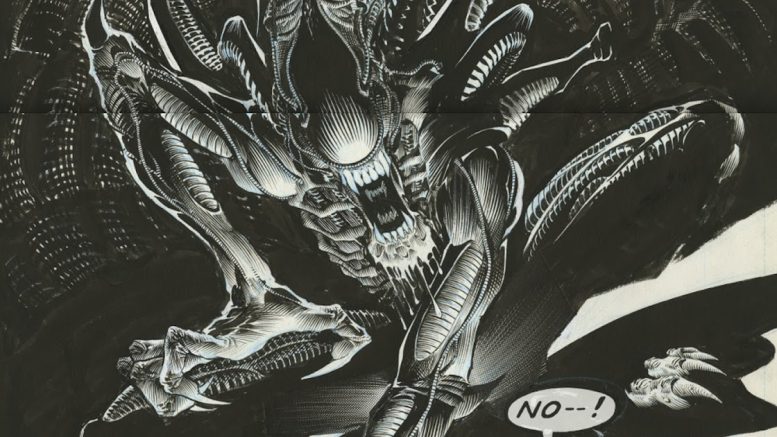
Sacramento area cartoonist and storyteller Sam Kieth, best known for his creation, The Maxx, and whose work on Wolverine and Batman drew national attention, died on March 16, 2026. He was 63 years old.
He died of complications from Lewy Body Dementia, a degenerative brain disease that afflicts more than one million Americans. He is survived by his mother, Sammie Robertson and his wife of 43 years, Kathy Kieth.
Throughout his career, Kieth created memorable, atypical takes on some of the most famous characters in the comics, including Wolverine, The Hulk, and Batman. His depictions of these iconic heroes – unshaven, wearing tattered costumes, and struggling with complex interior monologues – stood out on comic racks filled with more traditional superhero fare.
But it is with The Maxx that Kieth is most associated. The Maxx followed the adventures of a homeless superhero and a social worker who share a connection to a mythic alternate universe called The Outback. The series explored adult themes rarely touched in mainstream comics and was a showcase for Kieth’s richly detailed and idiosyncratic vision. The first issue, published in 1993, sold a million copies. In 1995 MTV adapted The Maxx as an animated series, bringing Kieth’s work to an even wider audience.
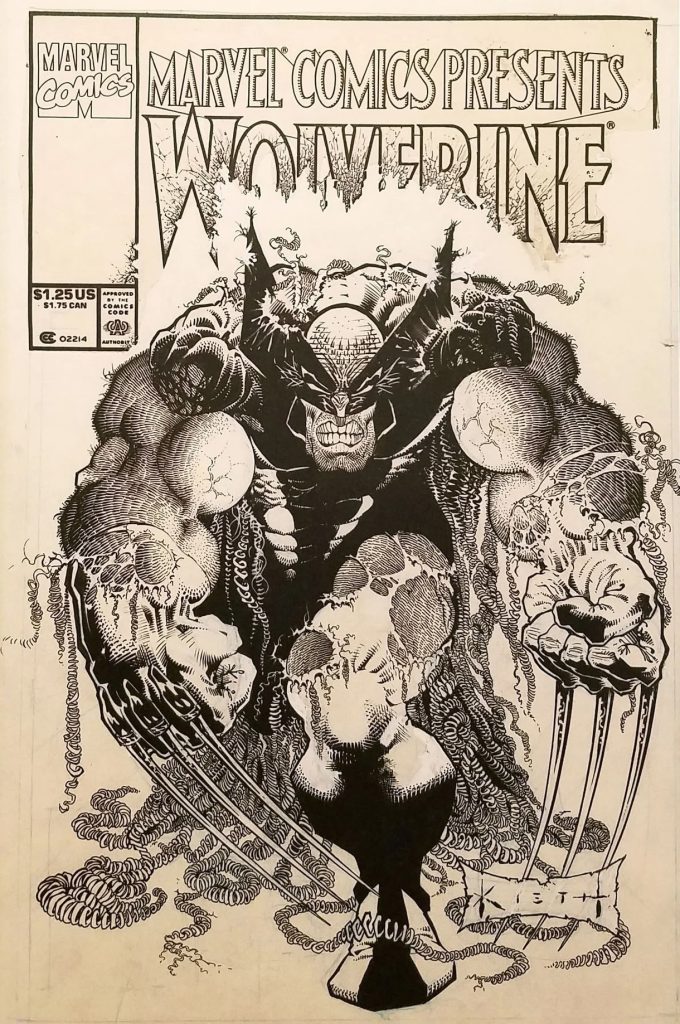
Original artwork by Sam Kieth for the cover of Marvel Comics Presents No. 92. Published by Marvel Comics.
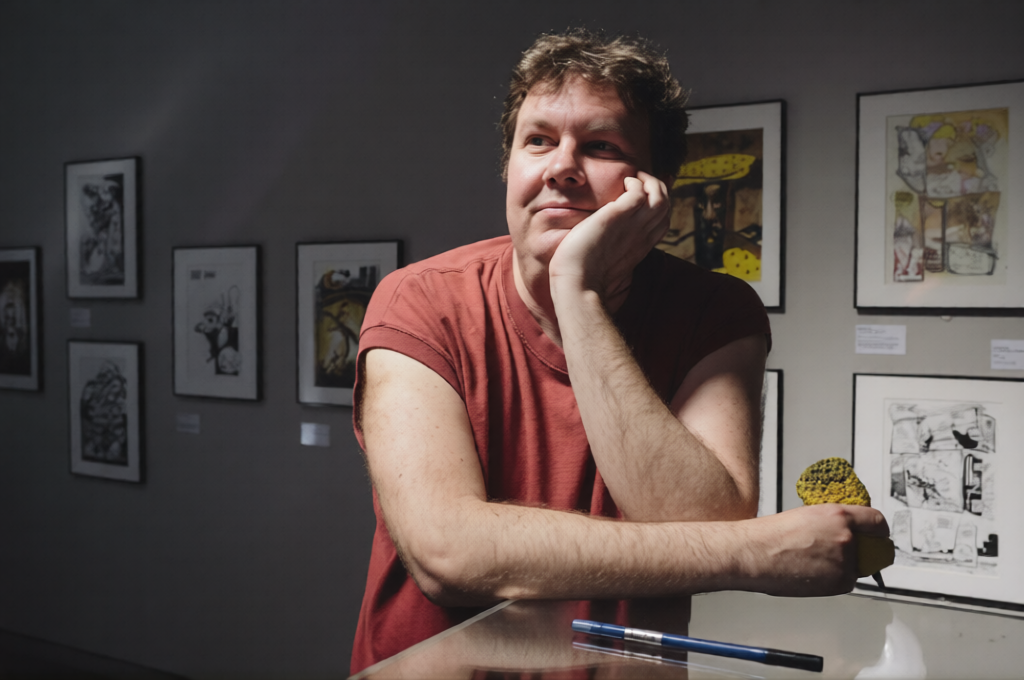
Sam Kieth at his exhibition at the Cartoon Art Museum: Samplings and Dabblings: A retrospective. A celebration of the art of Sam Kieth. Photo used by permission of The Cartoon Art Museum.

Illustration of The Joker by Sam Kieth. Kieth’s version of the villain was based on World’s Best Comics and Toys store owner Dave Downey.
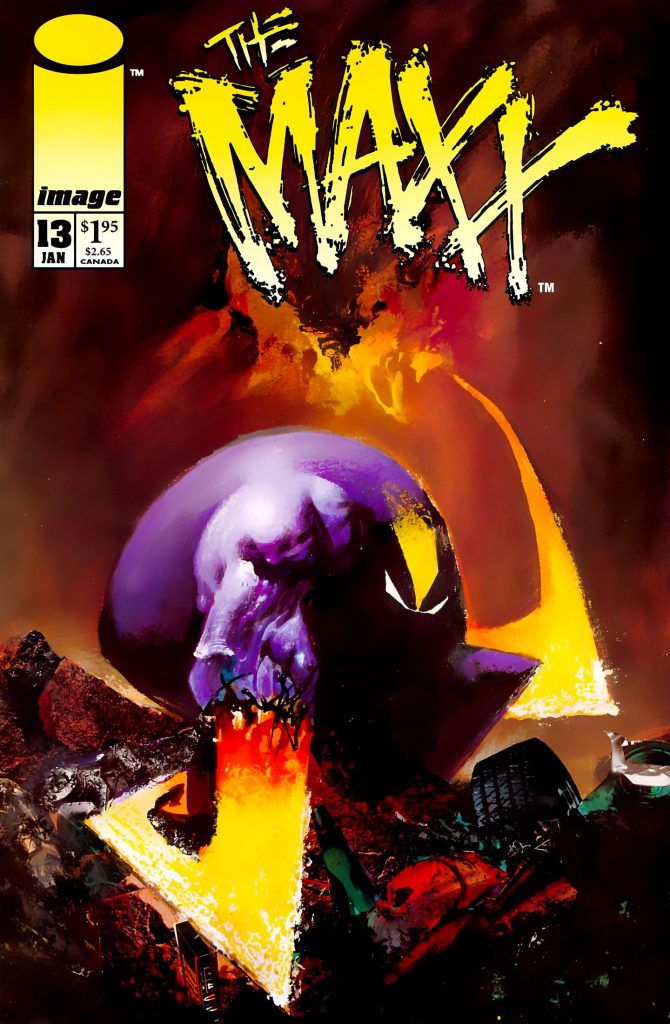
Cover of The Maxx No. 13, by Sam Kieth. Published by Image Comics, 1995.
In 1988 Kieth, along with Neil Gaiman and Mike Dringenberg, co-created The Sandman for DC Comics, later adapted as a live action horror series by Netflix. Kieth designed the character’s signature look based on conversations with Gaiman and brought Dringenberg on as an artistic partner. The series was well-received, but Kieth chafed at the strict editorial oversight and left in the first year.
Kieth grew up in Rio Linda and moved frequently within the greater Sacramento area and foothills before settling in Diamond Springs a decade and a half ago. His first published work was a cover for a Davis-based science fiction magazine, The Phantasy Network, in 1982. That same year he married Kathy Kieth, who strongly encouraged his artistic efforts.
In 1985 he landed his first professional comics job, as an “inker” (finishing artist) on Mage, a black and white adventure fantasy comic written and drawn by Matt Wagner. While working on Mage and other contract projects, Kieth continued to create original stories for an array of independent comics, publishing dozens of stories and covers by the end of the decade.
Determined to make it into mainstream comics, he spent an entire paycheck to overnight copies of his best work to every editor working at Marvel and DC Comics, then the two major comic publishers in the US. The ploy paid off; he was immediately offered work at DC. He started out as the inker on a forgettable 1988 superhero title called Manhunter, but soon moved up to “penciller” – the lead artist in the piecework system common in comic book production – on The Sandman.
The success of The Sandman enabled him to pursue projects more aligned with his often-obscure interests, including Epicurus The Sage, a comedy-fantasy based on the life of the 3rd Century Greek philosopher. The project was written by William Messner-Loebs, a friend from Kieth’s indie comic days and published by Piranha Press, a prestige offshoot of DC. Freed from the strict deadline of a monthly publication, Kieth handled both penciling and inking on the project – a process he would largely follow for the rest of his career. While Messner-Loeb’s script was clever, it was Kieth’s lush and rapidly improving artwork that drew the most attention.
His 1990 stint on Aliens: Earth War, a series based on characters from the Aliens film franchise, brought Kieth his first significant attention from fans. The Alien creatures and dark, claustrophobic settings of the Ridley Scott films were a perfect fit for Kieth’s gothic horror leanings. He also employed photorealistic elements for the first time, giving the art a sense of gravity not found in his earlier work.
Offered a spot at Marvel Comics in 1990, he did an issue of The Incredible Hulk, working with writer Peter David and childhood friend Kelley Jones. Kieth and David followed with a groundbreaking run of Wolverine stories for Marvel Comics Presents. Kieth’s exaggerated and intense vision of a near-feral Wolverine, sometimes nude, or wearing only shreds of a costume, propelled him to fan-favorite status. When a group of top tier Marvel artists split off in 1992 to form a creator-owned independent publisher called Image Comics, they invited Kieth to join them.
The result was The Maxx, a deeply psychological and sometimes bizarre series published from 1993 – 1998. Kieth conceived and drew the stories, with assistance from Messner-Loebs on early scripts and art help from Jim Sinclair, a local friend who had worked at a Citrus Heights comic book store. Initial sales were impressive but fell with the near-collapse of the comics market in the mid-nineties. Kieth ended the series with the 35th issue.
Eager to tell more complex stories for a wider audience, Kieth turned his focus to filmmaking. His comics from this period, including Friends of Maxx: Dude Japan and Four Women, were deeply personal, and often functioned as templates for proposed film projects. He wrote over a dozen movie scripts and came close to a deal to turn The Maxx into a feature film, negotiations which are still ongoing. Kieth directed several films, only one of which, Take It to the Limit, a 2000 B-movie for producer Roger Corman’s New Horizons Pictures, was released.
In 2006 he returned to the forefront of mainstream comics with Batman: Secrets, the first of a series of high profile projects featuring DC’s biggest star. Kieth’s Batman, Joker and Gotham City were rendered in a freewheeling and surreal style that stood in strong contrast with the sombre tone of the Christopher Nolan Batman films and most contemporary portrayals. Kieth’s graphic novel Arkham Asylum: Madness made The New York Times Best Seller list in 2010. A Batman/The Maxx crossover, Arkham Dreams, was his final work, completed in 2020 as his illness forced his retirement.
Kieth maintained strong ties to the Sacramento creative scene throughout his life, working with Davis artist Chris Wisnia on Ojo, a 2004 horror comic, and designing record covers for local rock acts The Groovie Ghoulies, Giant Squid and Matt K. Shrugg. Dave Downey, owner of World’s Best Comics and Toys on Watt Avenue served as Kieth’s model for The Joker; the heroine of Zero Girl was modeled on The Frenchmen’s bassist – and former News and Review contributor – Amy Paris. He also contributed regular illustrations to Kathy Kieth’s poetry magazine, Rattlesnake Review.
As per his wishes, there will be no memorial service. His family suggests that donations may be made in his memory to either Hero Initiative, Comic Book Legal Defense Fund, or the Lewy Body Dementia Association.


Be the first to comment on "Sam Kieth, Sacramento-Born Comic Innovator Behind The Maxx, Dies at 63"