
By Paul Muller
The economic pressures crushing farms today are also reshaping rural communities and the future of food
Way back in 1981 or so, when the stirrings of Full Belly Farm were just beginning and the notion of organic farming seemed a poke in the eye to much of the farming establishment, the United States was in the middle of a farm depression. It was a tragic time when farmer suicides and despair rode hand in hand with low commodity prices, bad farm policy, high interest rates, bankruptcy auctions and too many economists who believed a “shakeout” of “inefficient farmers” was desirable. An estimated 300,000 farms failed in the first four years of that decade.
That was when I made my decision to farm and to explore options for farmers who were running out of options. Organic farming became our pathway.
Finding a single culprit for the collapse of so many farms was nearly impossible because the causes were many. Farmers expanded during good times by borrowing against their land. International trade disruptions lowered prices. New technologies produced more food for less money, which led to overproduction. Interest rates soared. Land became a commodity. Farmers grew dependent on expensive chemical inputs they could not control. Government policy embraced the idea of “get big or get out.” Even the idea of family farming began to be dismissed as a romantic myth.
Legislation supported technologies. The farm bill supported surplus production while trying to bail out struggling farmers. University research sought to replace people with tools that, in turn, cheapened commodity prices.
Perhaps this is the creative destruction of capitalism. Many technologies have freed farmers from backbreaking labor while creating abundance and lowering food prices. But the bargain came at the expense of rural people and rural communities.
Farm failures were a tragedy then, and we are repeating that tragedy today. As Wendell Berry wrote in his 1987 essay Preserving Wildness: “We have never known what we were doing because we never knew what we were undoing.”
I grew up witnessing that undoing. It is part of a long history of removing people from the land, whether through the violent displacement of Indigenous people or the slow deconstruction of rural communities that continues today. Ultimately, the undoing means removing stewards — people whose hearts are invested in a place and whose hands are shaped by the work of tending the land.
In 2026, farmers are in deep trouble again.
Global conflict reaches the farm gate
The Strait of Hormuz — so far removed from our local farms.
Yet if you are an American farmer growing soybeans, wheat, corn, cotton, almonds, walnuts or lettuce, you need fertilizer for spring planting, diesel to power tractors and stable markets for your crops. For farmers, the Strait of Hormuz is now part of coffee shop conversation.
Most commodity farmers today are making calculations about which crops will lose the least money and how long they can hang on.
As much as 20% of California’s almond and walnut crop moves through the Strait. Walnuts may spoil aboard ships waiting for passage. The ripple effects will impact producers for years. At the same time, roughly one-third of the world’s fertilizers — urea, potash, ammonia and phosphates — normally pass through the Strait of Hormuz. U.S. fertilizer prices have surged since the start of the war.
The implications of fuel and fertilizer disruptions are being felt worldwide. Farming systems built on stable supply chains and predictable input prices are showing their vulnerability to events unfolding far from the farm gate.
How we are adapting at Full Belly Farm
At Full Belly Farm, fuel and electricity prices are climbing sharply, and we may see energy costs rise by 50% for planting, managing and marketing our crops. We will absorb those costs and hope market prices eventually reflect them.
But we also saw some of this coming.
For years, we have invested in solar power to run our packing shed and pump water, steadily working toward greater energy independence. This year we added new EV vehicles to improve harvest efficiency and crew movement.
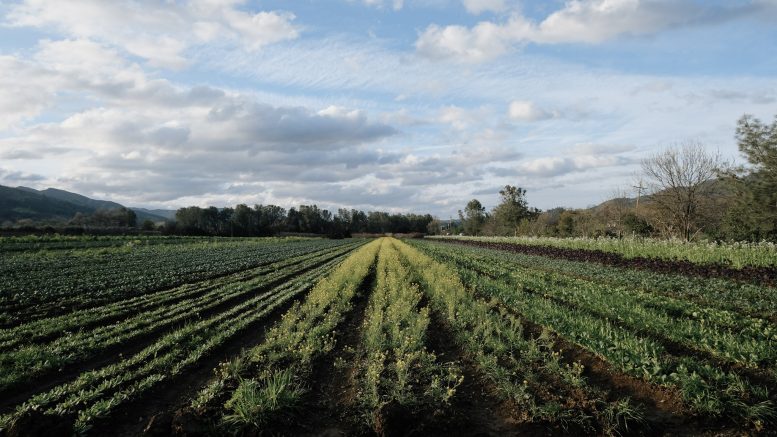
Our fertility management increasingly relies on biological processes: cover crops, compost and crop rotations. We are focusing more on the microbial life in the soil and the natural potential already present on the farm. We aim to grow more robust microbial communities through root diversity and more complex cover crop mixes.
Those practices do not shield us completely, but they do provide some insulation from the shocks of a global conflict.
What the soil is teaching us
The other day, while schlepping produce and tallying purchases at the Palo Alto Farmers Market, I overheard a young customer refer to “that old farmer over there,” and I realized the person I see in the mirror may look different to others.
This past week, this old farmer went to University of California, Merced to hear Dr. Jennifer Pett-Ridge speak about the relationship between soil microbes, plants and carbon, and what that means for the work we do at Full Belly. She is a principal investigator at Lawrence Livermore National Laboratory and affiliated with Innovative Genomics Institute at University of California, Berkeley.
One of the strongest lessons from the research is the growing understanding of soil life and how to strengthen it. Plants release sugars through their roots, feeding enormous microbial communities in the soil. In turn, those microbes feed the plants. Nearly half of soil organic matter is made up of dead microbial life.
Our job as organic farmers is to create the conditions for more of that life to flourish.
The benefits are significant: lower imported fertility costs, improved water efficiency, better micronutrient availability and stronger drought resistance.
We see evidence of this resilience at Full Belly. Recent surveys by UC researchers found earthworm populations in our orchards were nearly double those found in neighboring orchards. Soil organic matter is slowly increasing. We are reducing imported compost while maintaining strong crop yields because we better understand the biological systems already at work here.
Organic, regenerative and sustainable farming all require people on the land with intimate knowledge of weather, water, ecology and limits. Land treated simply as a commodity dismisses the communities and skills needed to care for it well.
Those failing farms represent generations of knowledge, love, and investment. Whether conventional or organic, they are not easily replaced. Farming is nuanced and skilled work based upon knowledge of the land and ecology of where it is practiced. Stewardship cannot simply be replaced with GMO seeds, automation or an AI application.
Three interlocking ideas. Lots of thoughts about the path we are on.
Extend your hearts to the good people caught in a bad system.
We continue our work treating land as a community asset, including building homes for farmworkers. Consider supporting Casa Agraria and helping with this effort.
Blessings on your meals.
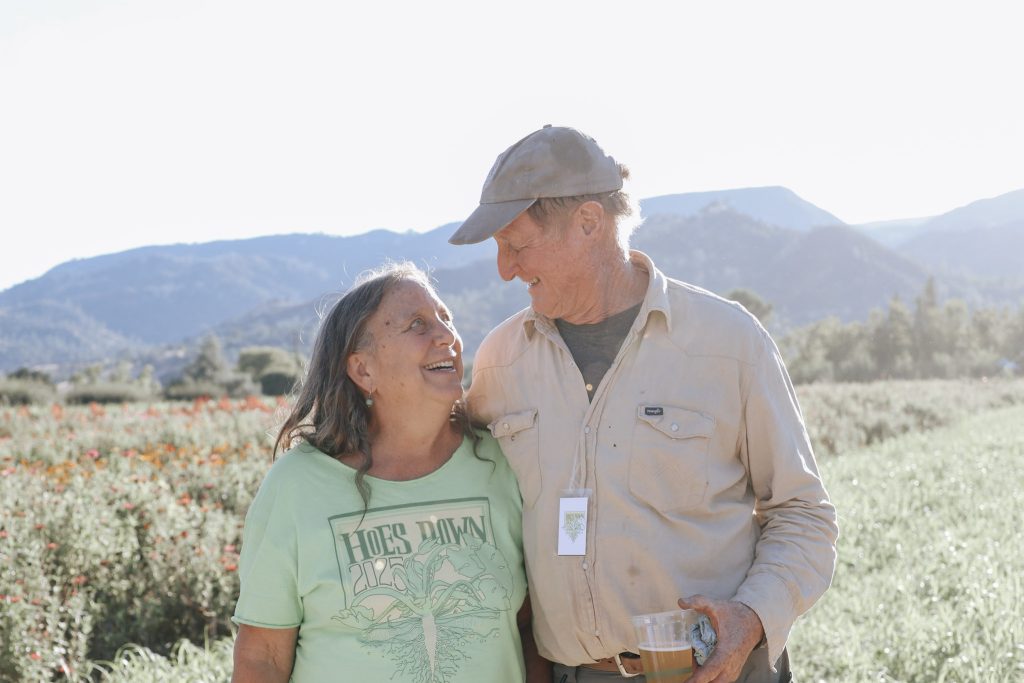
Paul Muller is an organic farmer and co-owner of Full Belly Farm in the Capay Valley. For more than 40 years, he has helped pioneer diversified organic farming practices focused on soil health, biodiversity, regional markets and long-term environmental stewardship.



Be the first to comment on "Essay: A handful of soil, a lifetime of lessons"