
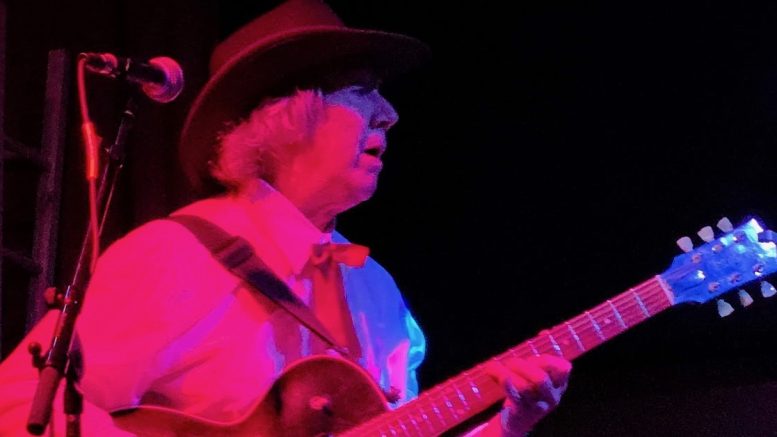
Holzinger’s upcoming solo effort ‘Juke and Jive’ is the culmination of a long, unpredictable journey through music of generations past
When Mark Holzinger first walked into the Machinist Hall in Rancho Cordova, it was to be inducted into the Western Swing Society’s Hall of Fame. At that point, he’d spent 23 years as the lead guitarist for the country band Lost Weekend, a group that traveled California, Nevada and beyond as it threw some high-energy effort into a music tradition that dates back to the Dust Bowl. Holzinger’s background as a jazz master who loved blues, soulful funk and the British rock invasion of the 60s somehow transmogrified into a distinctive if unexpected spark for a playing style that grew out of hard-scrabbled ranching life from Texas to Oklahoma.
As Holzinger was being welcomed into the hall of fame by the guardians of that threatened artistic genre, his father and two sisters were in the crowd looking on to see how far he had come.
“It was a magical day for me,” Holzinger recalls. “It was glorious — and it really meant a lot.”
That induction happened nearly a decade ago, but the experience left such an impression on Holzinger that he’s returned to the Machinist Hall to perform every year since, making his six-string virtuosity a regular sight in east Sacramento County.
Now, the music veteran is preparing to release a new solo album called “Juke and Jive.” It will pair Holzinger’s frenzied work on the fretboard with vocalists like Laurie Lewis, Berkeley’s Queen of Blue Grass, and Sacramento’s own country-swing divining rod, Mae McCoy.
“He’s just incredibly talented,” McCoy says of Holzinger. “He’s a monster on guitar … I think people are going to be super excited about what he’s done with the new album.”
For Holzinger, the road to becoming a journeyman of western swing was a long one. He grew up 17 miles north of San Francisco, the son of an electrical engineer and a music teacher and choir director. When Holzinger began showing enthusiasm for the guitar at a young age, his parents put him in lessons, which steeped him in the intricacies of jazz and set up a trajectory that wouldn’t manifest until years later.
But as a kid, Holzinger was discovering jazz at the same time he and his friends were becoming obsessed with the Beatles. By the 6th grade, Holzinger was already trying to form a band in the Fab Four’s image.
“The drummer had a snare, and we put a mega-phone on a microphone stand and pretended we were the Beatles,” he remembers with a chuckle. “That’s all we knew — was that we wanted to be the Beatles.”
Holzinger practiced guitar religiously as he progressed through school. He kept his jazz skills sharp while playing in college, even as he basked in other styles that were radiating through pop culture. He soon found himself as a hired guitar gun in Los Angeles — and one of the performers bringing him on board was none other than R&B and soul phenomenon Marvin Gaye. Over time, as Holzinger was alternatively home-based in LA, San Francisco and Nashville, he played alongside bob-jazz saxophonist Bishop Norman Williams, blues singer “Big Joe” Turner and Grammy Award-winning songstress Rickie Lee Jones. Then, while being the six-string centerpiece of a rockabilly band called the Mud Dogs, Holzinger opened for the Stray Cats, Chris Isaac, Asleep at the Wheel and the Neville Brothers, among others.
It was after returning to Northern California from a stint in Nashville that Don Burnham, the band leader for Lost Weekend, tapped Holzinger to join his group. Decades later, Burnham told SN&R that he still remembers the first time he saw Holzinger play: It was a moment when Lost Weekend was performing at “a weird country western nightclub” called Lucky Luke’s in the North Beach neighborhood of San Francisco. During their break, the bass player, Bing Nathan, asked Burnham if they should slip across the street to check out the Mud Dogs.
“We could only stay for about ten minutes,” Burnham reflects. “When we walked out of there, Bing asked, ‘Well, what do you think of the Mud Dogs?’ I said, ‘Well, they’re okay, but that guitar player is to die for. He’s the coolest thing since sliced bread.’”
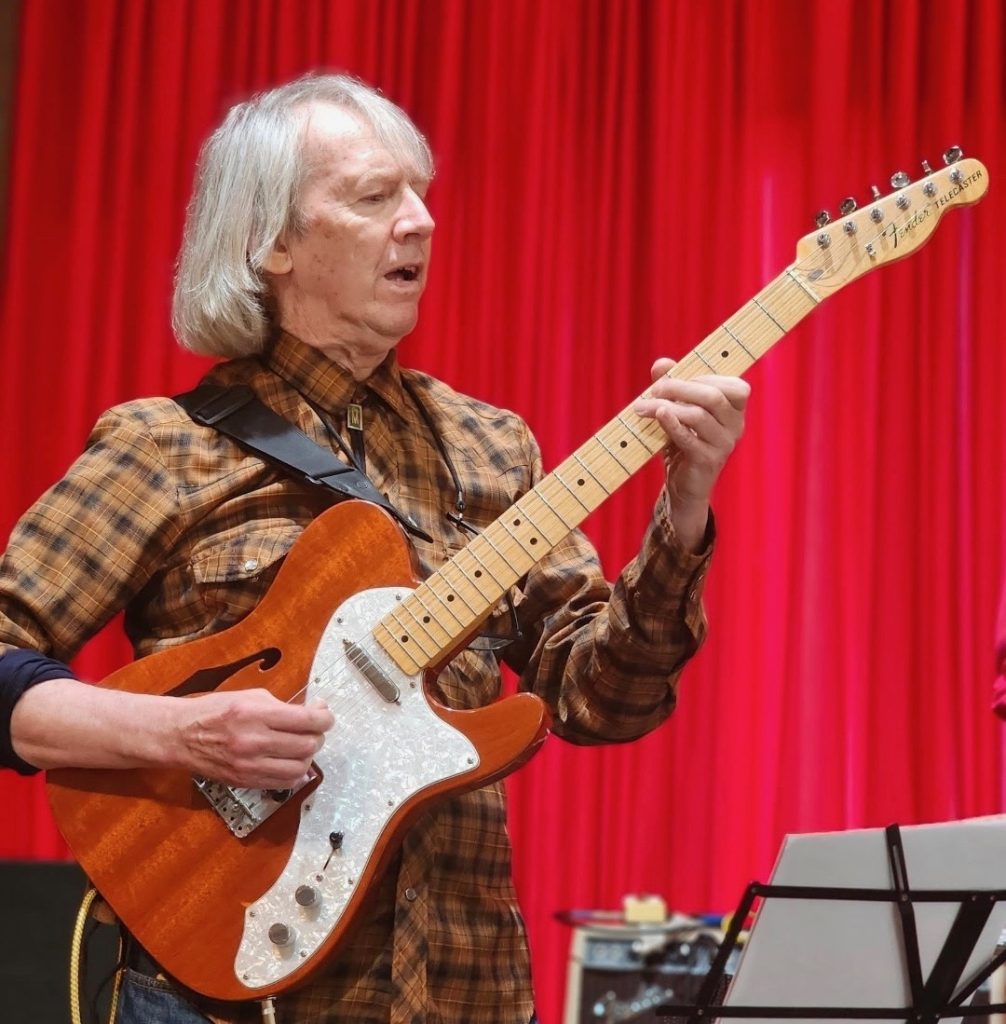
A few years later, Burnham snagged Holzinger as the lead guitar man for Lost Weekend. Once that happened, no one in the band regretted it.
“Mark is a very unique guitar player,” Burnham stresses. “He’s got his own signature style. He played what we used to call ‘take off’ guitar. So, all you had to do was open the gate and give Mark twelve bars and he knew what to do. He’s an exciting soloist.”
Holzinger played with Lost Weekend for decades and recorded four albums with the band, all of which played a role in him eventually getting nominated into the Western Swing Hall of Fame.
“When I got inducted, I had to thank Don Burnham for providing me this platform to play this music I love,” Holzinger says. “You know, thank him for giving me the stage to do that.”
Holzinger also believes that working in the studio with Lost Weekend on multiple projects put him in the right frame of mind to record his new upcoming album.
“We did it the real way,” he notes of Lost Weekend’s studio efforts. “No over-dubs — just getting the whole 12-piece band in a big studio and spending the real time … That’s really when I learned how to record, and how to relax while doing it.”
These days, as Holzinger puts the finishing touches on his upcoming record, he’s aiming to highlight both traditional jazz and western swing, all while alternating between instrumental tracks and songs featuring guest singers.
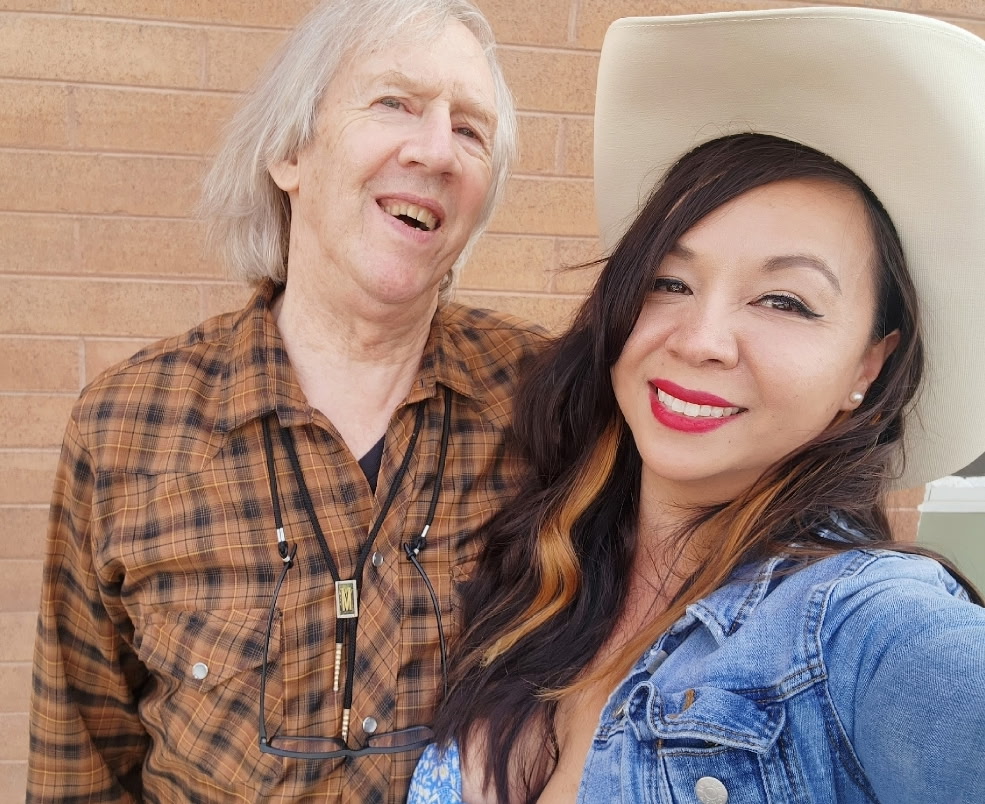
“I was honored when he asked me to be on the album,” notes McCoy, who’s the voice on Holzinger’s track “Real Good Time” and recently performed alongside him at The Hotel Utah Saloon in San Francisco. “I love his jazz-western-swing sound. It was just totally cool and natural for us to come together on a recording.”
Jazz and western swing music are — along with blues and other iterations of country — some of the first art forms to come out of American experience and go on to inspire people across the world. Holzinger is proud that his body of work since the 1990s has involved invigorating and safeguarding those genres from falling into obscurity. He doesn’t want them to fade away or stop being performed at live venues.
“I just can’t help but choose to love this traditional music,” he admits. “I feel like I am further concreting these traditions. It means everything to me, and gives me purpose, to carry that torch for this music that is truly American.”
“Juke and Jive” is due out in December on Apple Music, Spotify, YouTube and other platforms.


Be the first to comment on "There and back again: Regional guitar phenom Mark Holzinger opens up about his storied career while finishing latest album"