
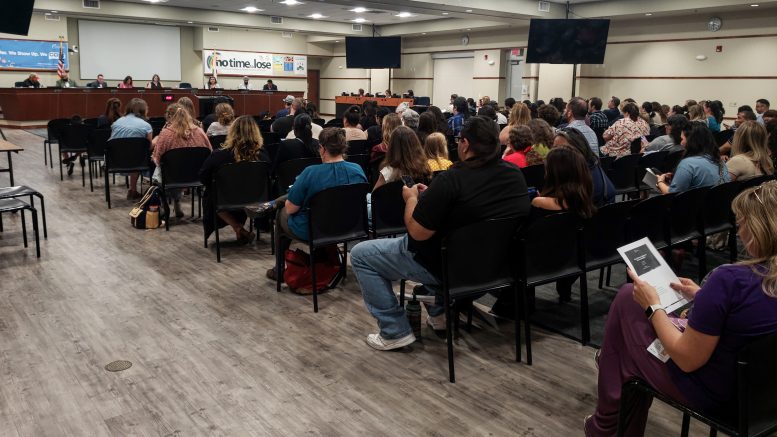
Sacramento City Unified lays off 503 employees to fight $170M deficit
Sacramento City Unified School District is facing a major financial deficit of $170.5 million that has left it scrambling to avoid state receivership. Though more state funding is on its way with the revised state budget, Fiscal Crisis and Management Assistance Team (FCMAT) Chief Executive Officer Michael Fine warned on May 7 that the funds would not be enough to fully mitigate the district’s risk.
The district sent final layoff notices to 503 employees on May 15, their latest action taken amid facing fiscal insolvency. With these staff reductions, it was projected by the district that it would save around $23 million. It was one of many hard decisions to come for the school board.
“I didn’t sleep much at all last night because I knew what this meeting was,” said Taylor Kayatta, SCUSD’s first vice president. “Every single one of those positions, not only is it a person, but it’s a job that is being performed for this district. They are doing real work.”
Fine warned the board that they would need to begin the receivership process soon to avoid this fate. Despite the warnings, the SCUSD board said they would refuse to go down that route for as long as possible.
“While the Board appreciates the support and expertise of FCMAT, we have questions about the accuracy of the numbers upon which the report is based,” Board President Tara Jeane said in a letter sent out to community members on May 12. “For example, the report doesn’t account for the expectation of an additional $51 million in one-time funding in the 2026-27 state budget or include items on our Fiscal Solvency Plan that are in progress and not part of the budget yet. Further, there are internal borrowing options that may provide more runway for us to course correct.”
She also said that the board is prepared to do what they must to conserve cash and increase operational efficiency.
Even with the assurance provided by the board, multiple community members have expressed concern over the district’s fiscal insolvency.
During a board meeting on May 7, Sacramento City Teachers Association President Nikki Davis Milevsky said during the union’s employee organization report that she is concerned for the lack of transparency from the district regarding the exact impact on the SCUSD community and its students. She mentioned that the Early Learning and Care, Visual and Performing Arts, and Career Technical Education Departments have cut classes as a result of budget cuts, which have affected multiple student programs like the district’s middle school music program and its building and construction program.
“There is a real crisis, and we need real numbers and up-to-date information to deal intelligently with it,” Milevsky said.
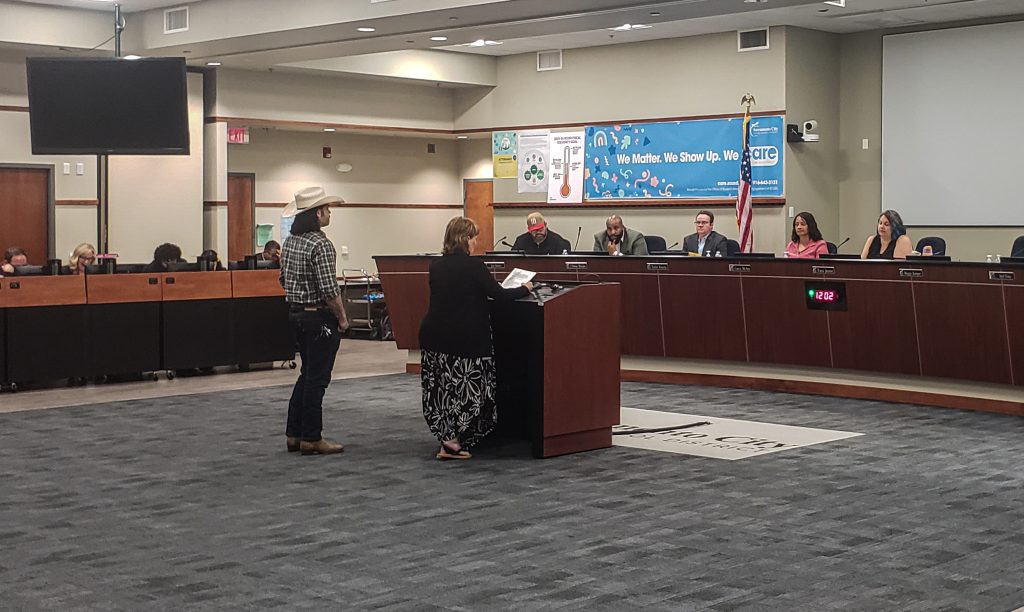
Service Employees International Union Local 1021 expressed concerns about the district’s current Fiscal Solvency Plan, which aims to make cuts to multiple departments.
“We need to be assured that the district operations can adequately function under any reorganization plan,” a SEIU representative said. “We need to know that any sacrifices demanded of our classified members will actually bring the district close to solving this fiscal crisis. And we need to be sure that the management positions being kept are necessary to the healthy functioning of the SCUSD and not the result of personal relationships between those who drafted this plan.”
Bryana Insixiengmay, who has a 4-year-old daughter who goes to Edward Kelley Preschool, said she was concerned about what the current financial situation could mean for her children.
“My concerns are really what does the school district look like in the next three, five, 10 years,” Insixiengmay said. “What does that look like for [my daughter], her wellbeing in the school district, of the quality that she will get from the teachers, the programs that are offered and the different opportunities.”
Ezra Cortez, who works with a variety of schools within the district as a recreational aide for 4th R, said he was also concerned as to what this could mean for the children.
“All I hope is that they stay transparent throughout this because there’s hoping and then there’s misleading,” Cortez said. “I hope that the way they handle it is thought out.”
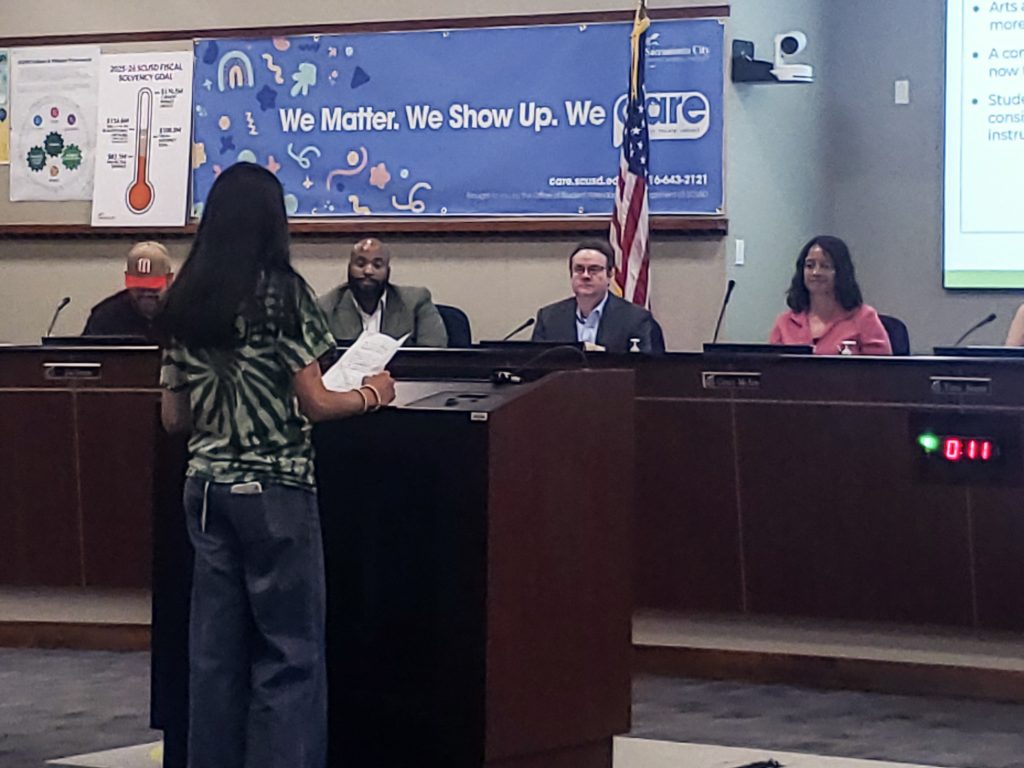
Fiscal Insolvency History
This is not the first time that SCUSD has faced fiscal insolvency. Back in August 2018, the Sacramento County Office of Education disapproved SCUSD’s 2018-19 Adopted Budget for the first time in the district’s history due to a $22 to $40 million fund balance shortfall for the 2019-20 academic year. A revised version was proposed in October 2018 and was rejected a second time.
To address a fiscal insolvency risk score of about 45%, the district laid off over 170 certificated staff members in May 2019 to address a $35 million budget deficit. The layoffs were not enough and a third budget revision was presented to SCOE, only to be rejected a third time in September 2019.
In 2020, SCUSD gained some relief during the COVID-19 pandemic, going from experiencing a $12 million deficit to a $23 million surplus due to a mixture of COVID relief funds and savings from utilities, transportation and unfilled vacant positions.
On Sept. 18, 2025, it was revealed that the district faced a budget deficit of about $43 million, showing that SCUSD would drop below the state-required 2% reserve. This later increased to $51.6 million in Dec. 18, 2025 and ballooned to $170.5 million in March, which is the current deficit amount.
Some causes for this deficit include rising special education costs, unsustainable employee contract and benefit costs, declining enrollment and budgeting mismanagement.
What is state receivership?
According to a FCMAT report, state receivership occurs when a local education agency or school district has an outstanding state loan and is assigned an administrator or trustee by the county superintendent to improve its fiscal situation. This process has to be initiated by the district with a request for an emergency apportionment from the state and is usually considered a last resort option before funds run completely dry.
In the process of returning to fiscal solvency, districts that enter state receivership often face multiple conditions such as loss of local control, state and county oversight, school closures, extra loan-related expenses including interest and continued rigorous cuts. The district would also be required to meet any additional standards set by FCMAT.
It can take years to exit state receivership. According to the California Department of Education, West Contra Costa Unified School District entered state receivership in 1990 and did not exit receivership until 2012, about 21 years. Oakland Unified School District took about 22 years and got out of receivership in June 2025.
In California, only 10 school districts have entered into state receivership in the state’s history. The most recent district to enter receivership was Plumas Unified School District in June 2025 after suffering from a budget deficit of about $8 million. To this day, the Plumas district continues to have an ongoing budget deficit and faces more cuts.
Possible Solutions
Soon after the initial deficit was discovered, SCUSD initiated a spending freeze on the general fund unrestricted budget starting Oct. 1, 2025. The general fund is the district’s primary operational budget, with the unrestricted portion used to cover operational costs that aren’t tied to any state or federal mandates.
This action included a hiring freeze on non-classroom positions, limiting supply purchases and staff overtime, a freeze on all non-required staff travel excluding field trips and a freeze on new contract agreements unless required for operational compliance.
On Nov. 20, 2025, the SCUSD board approved a Fiscal Solvency Plan that would cut all department budgets by 20% and reduce administrator positions to no more than 270.
The district continues to offer frequent updates to further improve the plan and its expected reduction targets, with the most recent update on April 30 recommending various scenarios for central office restructuring and position reduction. The board is currently favoring Scenario E in which all central office department full-time equivalent positions will be reduced except for administration and superintendent, which will be increased from two to four.
The next board meeting will take place tonight at 6:15 p.m., where an update to the Fiscal Solvency Plan will be presented and alternative layoff decisions will be decided.
Solving Sacramento has reached out to the SCUSD board for comment but has not received a response back.
This story is part of the Solving Sacramento journalism collaborative. Our partners include CapRadio, Capitol Weekly, Hmong Daily News, Russian America Media, Sacramento Business Journal, Sacramento News & Review and Sacramento Observer. Support stories like these here, and sign up for our monthly newsletter.





Be the first to comment on "With receivership visible on the horizon, what will SCUSD do?"