
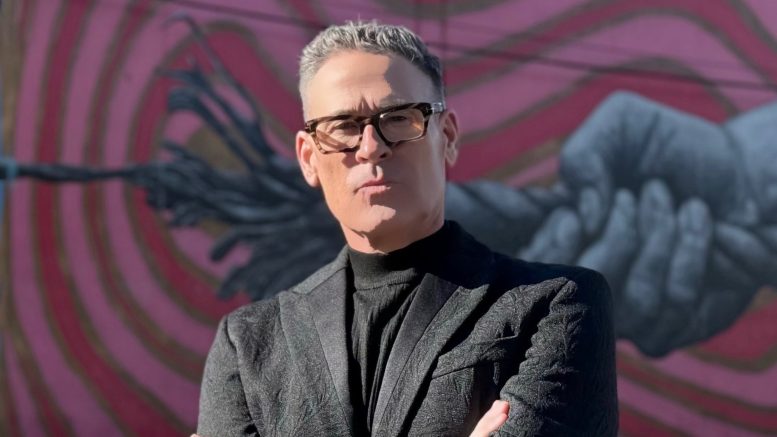
Sacramento law student makes compelling case that his late father was the Tylenol Killer
By Scott Thomas Anderson
Growing up, Joseph Cibelli was sure his father was capable of anything.
He remembers a man who was destructive, elusive and determined to be in control.
Most of all, he remembers a man with activities to hide.
That man’s name was Daniel Raymond Drozd.
Now, as the autumn leaves turn bronze and vermilion in Cibelli’s South Natomas neighborhood, the changing weather forces him to dwell on the impenetrable personality he says made his childhood a living hell.
That’s because in 2023, as he lay dying of pancreatic cancer, Drozd allegedly told two different people that he was, in fact, a serial killer that authorities have been hunting since the fall of 1982.
Drozd’s confession was in reference to a spate of deadly poisonings that quickly brought life in Chicago to an utter standstill. By October 1st, seven people were dead from unknowingly swallowing Tylenol capsules manually laced with cyanide. These tainted pills had been purchased in stores from the Windy City’s downtown to its far-flung suburb of Winfield. As authorities started ripping Tylenol bottles off every shelf in sight, more deadly capsules were located.
On Oct. 18, a heart-rending column was published in the Chicago Tribune about Mary Kellerman, a 12-year-old victim of the lethal agent. She was the youngest to die.
Even in the last week of October 82’, lab techs were still discovering concealed cyanide traps in local store supplies. Chicagoans were mortified: Between the callous pill-poisoner being at large, and broader forces of fear tied to the emerging ‘Satanic Panic,’ most harvest-time festivities were curbed in neighborhoods across the Midwest. The perpetrator would come to be known as the Tylenol Killer – but also “the Murderer who canceled Halloween.”
Two seasons of All Hallow’s Eve have come and gone since Cibelli’s father is said to have made his dying declarations. If Drozd’s words surprised the hospice workers who reportedly heard them, or his youngest son, Justin, whom he also allegedly confessed to, they didn’t entirely knock Cibelli off his center. Afterall, Cibelli says that – as a little boy – his father would take him on nighttime “stalking missions” in the wooded parks of Chicago, painstakingly creeping up on unsuspecting couples and willfully unnerving them in the darkness. Cibelli recalls seeing his father get off on hurting peoples’ sense of safety and security.
And it was always about targeting strangers.
Now, Cibelli, who’s currently attending the American Institute of Law, has spent the last 24 months investigating his father’s possible connection to seven unsolved murders that continue to scramble America’s crime lexicon.
What’s come out of his work is a compelling if startling argument that Daniel Drozd – an Army veteran who was working simultaneously as a police officer and electro-plater for G.M. with access to potassium cyanide – was the same man who managed to mystify homicide detectives for 43 years and running.
Cibelli knows the words of a cancer patient who is pumped with medications isn’t enough proof to finalize a theory. Yet when Drozd allegedly announced that he was Tylenol Killer, it marked the beginning of his son’s dogged probe, but not the factual cement below its ultimate findings. No, the case that Cibelli makes in the nonfiction book he’s just finished, “Dear Madman: the Tylenol Memoirs,” is constructed from a pain-staking re-examination of the murder spree that’s cross-referenced with the author’s own razor-sharp memory of Drozd’s movements while the deaths were occurring.
If readers walked away from “Dear Madman” convinced that a decades-old mystery has been solved, it will be because Cibelli’s recollections are so muscular with detail – so chillingly clear and vivid – that many of their data-points can be contextualized by the existing police reports and witness statements.
And Cibelli’s memory is crystalline for all the wrong reasons.
From his perspective, his entire childhood was spent in the shadow of a walking, uncontainable cauldron of rage and manipulation, a man who reputedly gave his wife multiple black eyes and concussions and dangled toxic chemicals near his youngest son. Beholding this seems to have caused Cibelli to develop a fine-tuned radar for the rhythms of his father’s temperament. And psychologists have pointed out that a hyper-vigilant child can become a better observer than their abuser ever knows.
“I had to learn how to watch him,” Cibelli reflects. “I had to know if his breathing changed. Anytime anything seemed out of whack with him, I was on it. I had to know if it was time to get out of the way. I had to know if I needed to grab my brother and sister. I had to know if it was time to run, or to stand and fight – I had to know what I was going to do. That meant I had to watch him.”
Twisted operations and the held-off hideaway
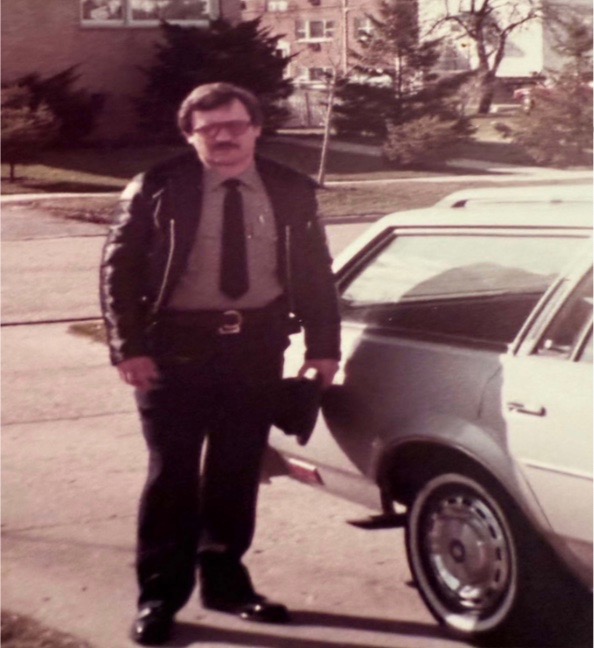
The journey to discovering the purported evidence against Drozd is laid out in granular detail throughout “Dear Madman.” But to get a sense of things Drodz allegedly did to hardwire Cibelli’s memory capabilities – including where Drozd was, what he was hiding and what was in his possession at the time of the Tylenol murders – one need only roll the clock back to when father and son were together at Saganashkee Slough Woods near Chicago in mid-September 1982. It was after sundown and Cibelli, who was only 11, was parked with his dad near the start of a walking trail into the trees.
“We’re sitting in the car, and he’s not saying a word,” Cibelli thinks back. “And he gets this look on his face, almost like – not a glazed-over look – but a very intense expression.”
The way Cibelli tells it, his father got out and fastened a green Army bag with a cross-body strap over his chest. Drozd then motioned for his son to follow him into the forest preserve. Cibelli says his dad was fixating on a couple that was strolling ahead of them on the trail. It was time for a victim-tracking odyssey. Cibelli says he and his father started creeping through brush and overgrowth while following the oblivious couple. Drozd would reportedly stop to make hand signals, as if the 11-year-old with him was a fellow Army veteran. Cibelli admits that he had no idea what the gestures meant, other than his father had made a ‘T’ signal to identify the couple as their ‘target.’ He remembers Drodz taking them on route through the woods that would eventually put them ahead of where the man and woman were going.
Then, Cibelli recalls coming to a fallen tree trunk just a little off the walking path. Drozd took a familiar blanket out of the pack he was carrying and laid it out over the leaves. That was for the boy to sit on. Now, Drozd allegedly pulled out a large section of camouflage netting to drape over both of their bodies. About 20 minutes later, the couple was finally approaching. Cibelli explains that he watched, stock-still, as his father moved all of the netting onto himself, went over the top of the fallen tree, and then deftly sidled up behind the still-unsuspecting pair. Cibelli says when Drodz was right behind them, he suddenly threw his hands up and grunted a noise like wild boar.
“The people turned around and went running, and he was chasing behind them all the way back,” Cibelli stresses. “They got to their car, and from where I was at, I could hear tires screeching. My father comes back, packs everything all up, calm as can be, then tells me, ‘That’s how you stalk your prey.’”
Decades later, after the family was discussing the numbing claim that Drozd is said to have made about the Tylenol killing before dying, Cibelli had a flashback to another strange survivalist-type excursion that he and his little brother Justin had been dragged along on at Busse Woods. He remembers his father’s bizarre behavior that night had stood out the same way it had at Saganashkee Slough Woods just weeks before. But this time, the incident had happened right as the Tylenol saga was starting to play out – and happened extremely close to one of the stores were poison was hidden.
That realization compelled Cibelli to start searching his memories for other out-of-character moments that his father had during this same three-week stretch, while checking those behaviors against map-points where more laced Tylenol capsules had been stashed inside businesses. For Cibelli, the resulting epiphany was both illuminating and stomach-turning: Based on special occasions, unusual outings and pop culture moments, he says his memory can place Drozd in or near almost every store where the cyanide death-triggers had been concealed.
That’s when Cibelli really started digging into the established facts in the case. He also recalled that during September and October of 1982, his father had been keeping a small work room in the basement that was full of bewildering books, pamphlets and unmarked chemicals – a locked den of mysteries – that he was not explaining to the rest of the family.
“So, 1982 was a very volatile year in our house,” Cibelli notes. “My father was extremely violent during that year.”
That’s one of many reasons Cibelli can resurface this timeframe with surgical precision. Put simply, he describes the domestic chaos as being overwhelming. And no one was stepping in: Drozd was a part-time officer for the Lyons Police Department in Chicago’s suburbs.
“One night my mom told me, ‘If he starts beating on me, you have to call the police because I can’t take it anymore,’” Cibelli mentions. “I was ten at that point. I eventually called the police when he attacked her. They just showed up and basically said, ‘Danny, knock it off.’ And that was it, because he was a cop. There was that blue wall. He was never held accountable.”
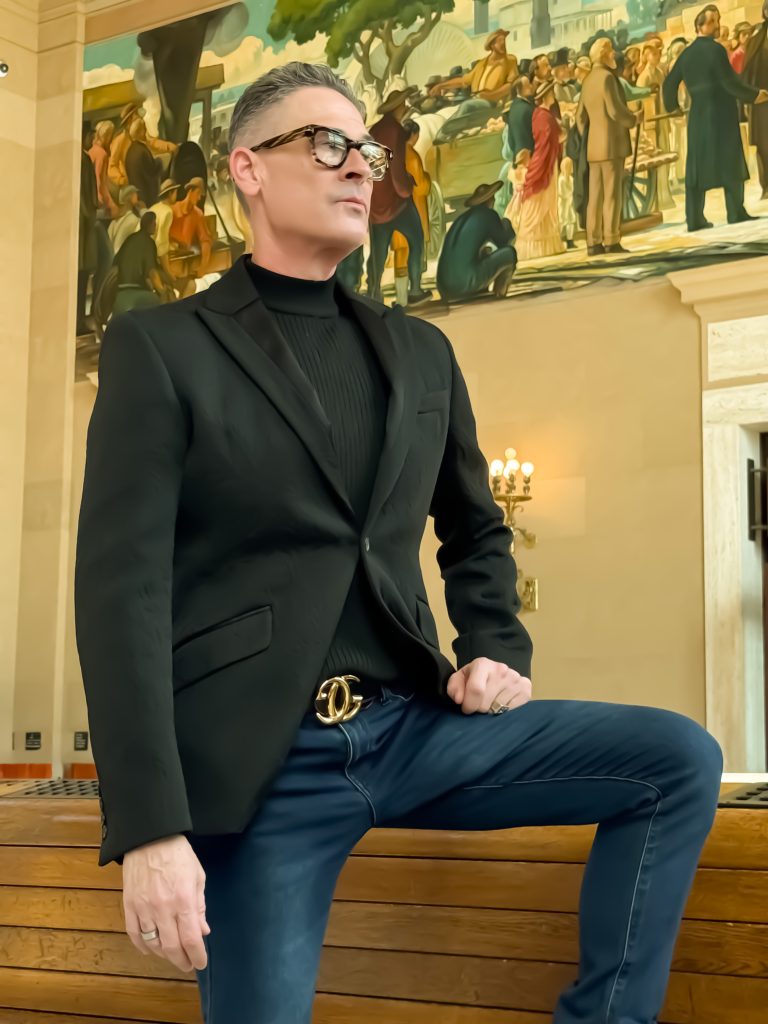
It’s not lost on Cibelli that, during the time of the killings, his father was often wearing an official jacket from the Lyons Fire Department, where he’d worked part-time shifts before switching to law enforcement. Cibelli doesn’t think bystanders or employee in any of the stores where the laced Tylenol was dropped would have questioned slightly unusual behavior from someone that they thought was a local firefighter – or knew was an area cop.
Though he understood nothing about them, Cibelli could also remember the names of the pamphlets and books tucked away in Drozd’s private sanctuary of secrets all those years ago. After his father’s death, he wondered if he could learn more about them, along with the nature of Drozd’s other job for Electro-Motors.
Cibelli’s husband, Craig Dresang, pointed out that if he was going to keep going down this path, he had to be aware of the possible effects it might have on him.
“I told him, ‘You’re not doing this without a therapist,’” Dresang remembers, adding that he wasn’t entirely surprised Cibelli needed to seek out the truth. “I asked him questions about his relationship with his dad when we first got together,” Dresang continues. “He’d told me right out of the gate how awful his childhood was, and how abusive his dad had been.”
Motives and other shades of the past
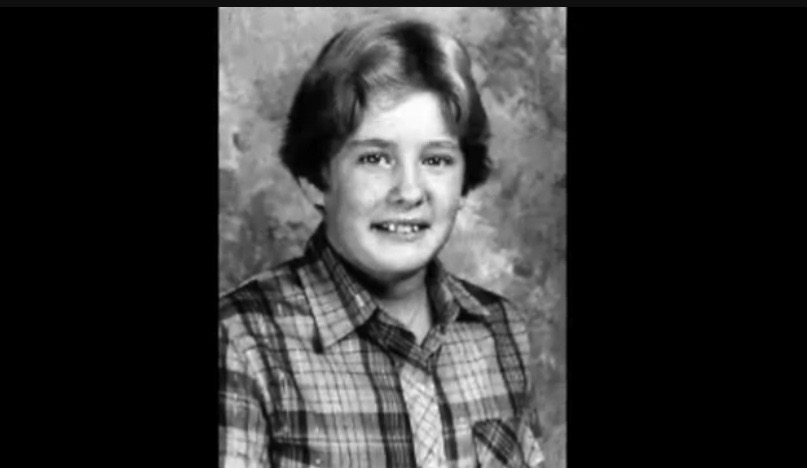
After 43 years, the Tylenol killings remain officially unsolved.
Fans of true crime podcasts or murder-marinated Youtube channels may know that, for a time, Chicago authorities had two different suspects in the case. One was thought to have committed a murder five years before the Tylenol events, while the other was convicted of carrying out a murder specifically as a result of them.
The first suspect was James Lewis, a con man who police believe attacked and dismembered a 73-year-old accounting client named Raymond West in 1978. The supposed motive was to embezzle $5000. When victims started dying from the Tylenol poisonings, Lewis wrote an extortion letter to the medication’s parent company, Johnson and Johnson, which was traced back to him through fingerprints. Prosecutors charged Lewis with writing the letter but never for the actual homicides. Some evidence suggests that Lewis was staying in New York during the exact time the tainted bottles infiltrated Chicago’s stores.
The other suspect was Roger Arnold. He was a dockworker who knew the father of one of the Tylenol victims, Mary Reiner, and was known to have been spending time at a hospital across the street from where Reiner bought the pills that took her life. Authorities executed a search warrant on Arnold’s home, reportedly discovering a cache of guns, ammo, test tubes, lab vials, beakers and manuals on poisoning and explosives. One of the citizens who’d called in the initial tip to police about Arnold was his local bartender, Marty Sinclair. Realizing that he was being eyed for the Tylenol crimes, Arnold decided on delivering pay-back to Sinclair. In 1983, Arnold spotted someone he thought was the loose-lipped barman and promptly shot him dead. Unfortunately, the man that Arnold blew away was actually an unrelated local named John Stanisha. Arnold was sentenced to 30 years in prison for Stanisha’s killing, though he was never charged with the Tylenol murders.
Lewis and Arnold have both since passed away.
The cases against each suspect were never strong enough to take to court.
Cibelli hopes authorities find the case he’s assembled against Drozd more convincing. The task force for the Tylenol killings is housed with the Arlington Heights Police Department. Cibelli has contacted that team with the totality of his findings.
One person who thinks authorities should pay attention to Cibelli’s findings is Millicent Tidwell, a retired statewide criminal justice administrator who is also a 5th generation Sacramentan. She’s been friends with Cibelli for over seven years and recently read a draft of “Dear Madman.”
“Oh my god, my heart broke for him and his family and all that they went through,” Tidwell says of the page-turner. “I think Joe is a good storyteller, as far as writing and conveying things emotionally … His book is so enthralling … For me, what really got my attention in the book was not just one, but two, death bed confessions. I practiced criminal law years ago, and know all of the exceptions to the ‘hear say’ rule, and I think people usually don’t make stuff up at that point. I think Joe had these feelings, and this sense of knowing – and remembering exactly what he saw – but I believe it all really coalesced in his mind around the death bed confessions.”
If Drozd was the Tylenol Killer, Cibelli’s theory of what drove him to do it is lucidly articulated in “Dear Madman.” However, after hearing about Drozd for 23 years, the author’s husband, Dresang, believes he may have had multiple motives, and perhaps – before the avalanche of public vigilance started – might have been building towards something truly unthinkable.
“My theory was he was going to take out his own family,” Dresang says.
Cibelli’s full, intriguing case against his father, much of which isn’t mentioned in this article, makes “Dear Madman” a gripping trek into the shadow of a crime that’s never lifted. It also unflinchingly illuminates the effects and impacts of a violence-battered childhood.
Publishers are already showing strong interest in releasing the book. However, for Cibelli, just the process of writing it has started to put the past into perspective.
“There was just so much darkness, and I think the best way to expose that is just by shining a light on it,” he says. “I’m putting that light of the truth on this horrible stuff, and, for me, I feel like I’ve gotten all this out … This is not a story I’m proud of by any means. I’m not trying to get famous from this. My heart hurts for the victims. I mean, I was 11 at the time, and a 12-year-old girl died. She was the same age as I was.”
Scott Thomas Anderson is also the writer and producer of the true crime podcast series “Trace of the Devastation.”

Be the first to comment on "Son of a serial killer?"