
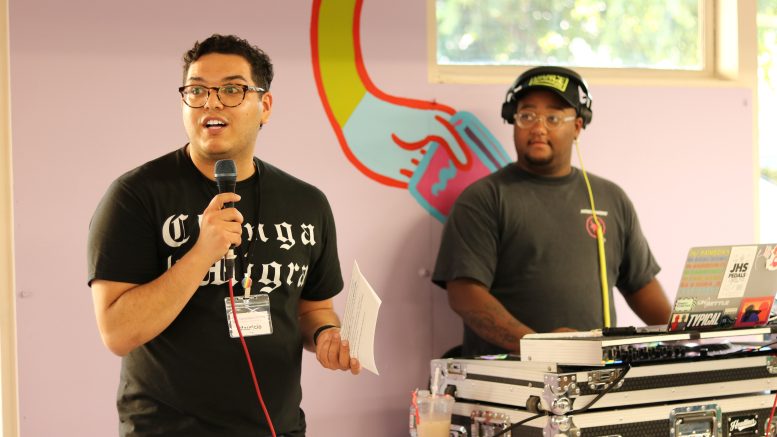
By Srishti Prabha
Lavender Library, a volunteer-run LGBTQ+ archive and lending library in Midtown Sacramento, has long relied on grassroots donations to stay afloat. Moving forward, that might become even more critical as funding for LGBTQ+ organizations is jeopardized.
Lavender Library Vice President Mauricio Torres said the organization has recently seen an influx of local donations — a sign of community members stepping up at a much-needed time after their door and window were smashed in February.
“It was really beautiful just to see the outpouring of community support,” Torres said, about an event at the library that he speculated could be a hate crime.
Even though the library recently received its first state grant, Torres’ vision of growth has been put on hold due to policy language surrounding LGBTQ+ communities. “We did have dreams of tapping into additional grants, which could have included federal funds,” said Torres. “But the reality of the world right now — we’re just putting a pause to even dreaming about some of those things.”
That pause in ambition reflects a broader climate of political retreat, as organizations confront not just budget cuts but the growing normalization of hostility against LGBTQ+ communities in policy decisions. These communities face a volatile funding landscape shaped by possible steep federal reductions, limited grant access, and — until recently, with proposed revisions to California’s budget — the looming threat of state-level cuts.
The Trump administration’s executive orders targeting diversity, equity and inclusion initiatives in tandem with eliminating $125 million unspent grant funds from major health organizations serving LGBTQ+ youth and adults, like the National Institutes of Health, have made sustaining queer-focused organizations next to impossible.
“So many of our partners are losing funding — the attacks on HIV prevention, gender-affirming care … the rhetoric is just really anti-queer,” Torres said.
Hostile climate and the chilling effect
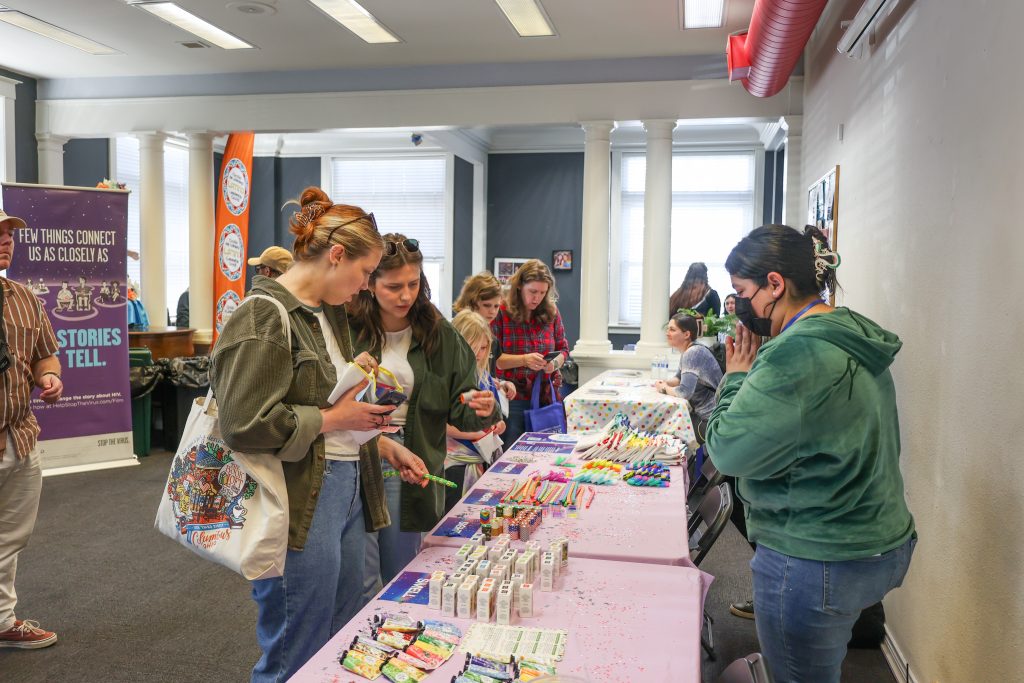
Michael Carson, who performs as the drag artist Mya Lusion, was preparing to celebrate Pride Month when they received devastating news: They were being laid off from the Race and Gender Equity Project, also known as RAGE Project, a Sacramento nonprofit supporting youth of color.
“The way that [the administration] has been treating me and people like me is honestly the most heart-wrenching thing,” Carson said. “It’s hard to live in a world where you don’t know what your future is going to be.”
Although RAGE Project does not receive federal funds directly, Stacey Chimimba Ault, founder of the organization The RAGE Project and Carson’s former employer, said changes in federal priorities have a chilling effect on the entire nonprofit sector, particularly those serving queer, Black youth.
“Organizations are afraid to hire [nonprofits] focusing on queer and trans BIPOC needs,” she said. “Even if we’re not federally funded, that climate still hits us.”
Adding to the blow, Carson’s role centered on mental health prevention for youth of color — a vital resource for many LGBTQ+ populations, including the RAGE Project, Ault had hoped to find new grants to support Carson’s position, but was surprised at how hard it was to find one, and ultimately, had to let him go.
“Usually, we can stagger grants — we hustle to make sure a program doesn’t just disappear when one grant ends,” she said.
At the Sacramento LGBT Community Center, one of the largest nonprofits in the region serving the LGBTQ+ population, youth advisory board member Naveah Trigo said the scarcity of resources is already taking a toll. From reducing mental health services to cutting youth programming at the Q-spot, federal and state funding is necessary for their work. And while Trigo’s work isn’t to generate funding, she said, for her and her colleagues, keeping the organization afloat is a prevailing thought.
Trigo noted that besides the threat of funding cuts, discomfort has grown for young LGBTQ+ people amid a hostile national climate. “There is a lot of fear around identity and belonging,” she said, adding, “A lot of anger comes from feeling like this world isn’t listening,” she said. “But there’s also so much passion to change it.”
That passion is being tested. After the U.S. Department of Health and Human Services canceled billions in grants from agencies like the Centers for Disease Control and Prevention and the Substance Abuse and Mental Health Services Administration, the Sacramento LGBT Center lost a $500,000 grant and with it, one of their two mental health clinicians.
And the threat didn’t stop at the federal level. Earlier this spring, LGBTQ+ advocates like Equality California sounded the alarm about Gov. Gavin Newsom’s May revision to the state budget. The proposal slashed more than $40 million from the Office of Health Equity, nearly half its budget. Some programs that provide grants to organizations serving LGBTQ+ communities (like Gender Health Equity and the California Reducing Disparities Project) were among those at risk.
Equality California advocates for LGBTQ+ civil rights by mobilizing communities and amplifying queer voices to drive justice and equality at every level of government.
“These were approved dollars, contracted for multiyear projects,” said Equality California’s executive director, Tony Hoang. “Now we’re being told they may be taken away — that puts everything from reproductive justice to diversity training at risk.”
Hoang said nearly 70 LGBTQ+ organizations across the state could have been impacted, including Equality California, which alone could lose $1 million.
But on June 28, the California Legislature passed a revised budget that restored full funding to the Office of Health Equity, reversing the most severe proposed cuts. The change came after weeks of outcry from lawmakers, advocates and community organizations who described the affected programs as “lifelines.”
“Now, LGBTQ+ health equity is more than a promise, it’s a protected priority,” said Hoang. “With serious budget challenges and growing threats from the federal government, Gov. Newsom and the California Legislature chose to stand with our community.”
However, uncertainty is still on the horizon for many of Sacramento’s queer nonprofits. At the Sacramento LGBT Center, Director of Youth and Family Programs John Garcia said the loss of federal funding had already led to difficult decisions.
“We lost one of our adult mental health clinicians, and right now, we only have one clinician who serves youth in our emergency shelter,” he said. “Those hours could be reduced depending on what happens next with the budget.”
Holding space
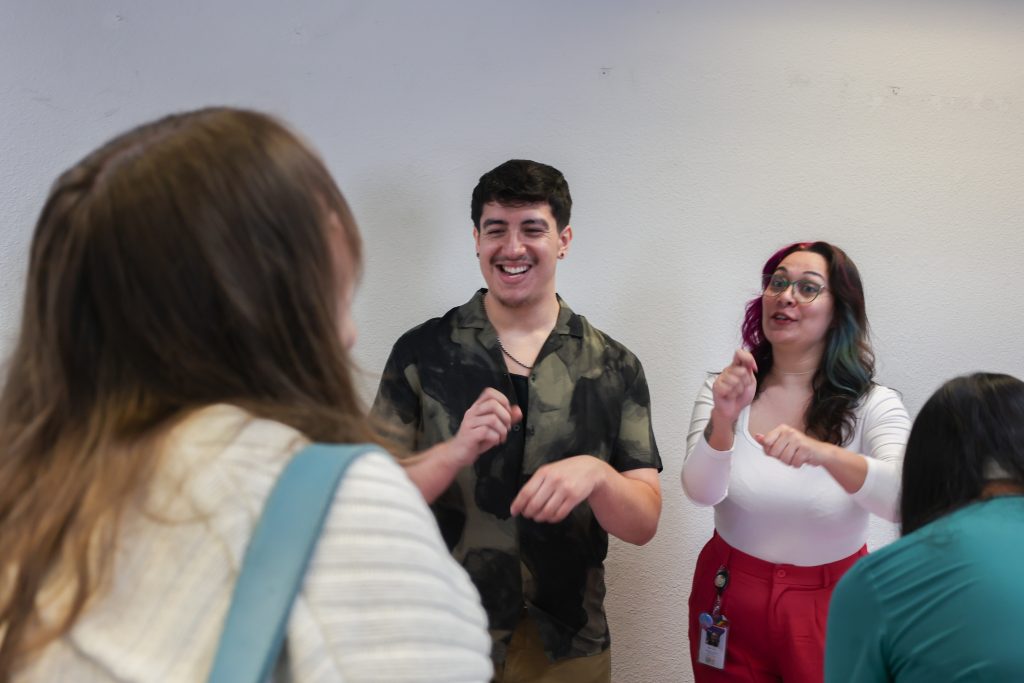
The Sac LGBT Center runs the Sacramento Pride festival every year, and saw a $100,000 drop in corporate sponsorships this year. This funding loss could greatly impact young LGBTQ+ people who turn to the center for help.
“It means youth in crisis don’t get to talk to someone or folks who need housing support or mental health care might not have anywhere to turn,” Garcia said. “We’re not just losing programs — we’re losing lifelines.”
A recent survey conducted by the Sac LGBT Center underscores the stakes: nearly 90% of the 2,600 local respondents said their rights had diminished since January 2025, and one-third reported that the current administration had severely impacted their mental health and sense of belonging.
Trigo’s own work is supported by state grants. She helps lead Pop the Stigma, a mental health campaign that features a unicorn mascot named Bubbles and encourages youth to seek care. During Sacramento Pride, her team ran interactive mental health checkpoints, a 360-degree photo booth and spaces for youth to ask questions of older LGBTQ+ mentors.
“We go back to providing them the resources and making sure that the center is a space that they can exist in,” Trigo said. “Maybe we can’t find the perfect solution, but we can get damn close.”
But holding that space is becoming more difficult.
At the Gender Health Center in Sacramento — which provides harm reduction services, HIV prevention, gender-affirming care and counseling for LGBTQ+ people — Executive Director Malakai Coté said the organization could’ve lost $450,000, about one-third of its counseling budget, had the previous state budget been approved.
“We’re already serving 200 people and have a waitlist of 80,” Coté said. “This isn’t just a number — these are real people who lose access to lifesaving support.”
The proposed cuts targeted contracts under the California Reducing Disparities Project and the LBTQ Health Equity grant. Prior to the reversal of the most severe cuts, organizations began moving quickly in order to adapt.
Coté said the Gender Health Center had already begun preparing for layoffs and counseling disruptions: “You can’t just cut off services with people — that would be considered abandonment, which is an ethical violation.”
Even with the state funding now restored, Coté said organizations are still reeling from the whiplash and reckoning with the risks of dependency on volatile government dollars.
“Whether it’s counseling, syringe exchange, Narcan access or just a space to be seen, we’re losing safety nets that our community has fought to build,” Coté explained.
Faced with these threats, organizations such as the Gender Health Center are reevaluating the strings attached to funding and are reconsidering federal funds.
“We don’t want to apply for funding that makes us prove our existence or erase the words ‘transgender’ or ‘gender-affirming care,’” Coté said. “Our mission is to provide wellness, joy and low-barrier care — we won’t move away from that.”
RAGE’s Ault echoed that concern, saying the loss of funding could be an inflection point for organizations to reimagine how they operate, beyond the limits of traditional nonprofit funding streams.
“We often pivot our work for funders,” she said. “But what does it look like to support each other, outside of those expectations?”
Torres, Ault and Coté question whether federal sentiments have penetrated the California sphere. “It would be important to see where there are alignments between some of those federal orders and then where you see alignments with policies that are being put in place in California,” Coté said. “And if you see alignments, that can provide you with some information.”
Ault is also wary of the impacts. “There’s this misconception that what happens in D.C. doesn’t affect small organizations like ours, but it absolutely does,” she said. “Foundations shift, partnerships dry up — It all trickles down.”
Like the Sac LGBT Center, Equality California has also had to minimize services after federal grant terminations.
“We lost a $250,000 grant from the Department of Justice that supported hate crimes prevention, particularly for the transgender community,” Hoang said. He finds that stronger state protections could help LGBTQ+ nonprofits weather the federal storm.
Equality California responded with a sweeping 2025 legislative package focused on identity protections, health care access, housing and workplace equity for LGBTQ+ populations in California.
Hoang said the passage of the state budget was just one step forward.“We must ensure that California continues to lead in protecting the values of inclusion and equality.”
For Pride, Carson set aside the job and loss and took the stage as Mya Lusion, performing a drag set rooted in survival and defiance.
“If you are a drag entertainer, your existence is political,” they said. “We don’t need permission to show up for our people, and we’re going to keep doing that in ways that center care, creativity and pride.”
This story is part of the Solving Sacramento journalism collaborative. Our partners include California Groundbreakers, Capital Public Radio, Hmong Daily News, Outword, Russian America Media, Sacramento Business Journal, Sacramento News & Review and Sacramento Observer. Support stories like these here, and sign up for our monthly newsletter.

Be the first to comment on "Sacramento LGBTQ+ groups navigate crisis — and relief — amid hostile climates and funding battles"