
By Chris Woodard
On the showroom floor of the 79th Annual Sacramento Bonsai Show in early May, a stone from the Tule Lake internment camp stood among various trees besides a photo of Helen Sakaishi, who will see the day dedicated to her patience and heritage.
The stone, given to Sakaishi by her mother during their family’s incarceration at Tule Lake, remains a symbol of resilience, continuity and the deep roots of the Sacramento Bonsai Club.
Not long after Japanese internment camps in California ended, the Sacramento Bonsai Club began in 1946 and celebrated its annual show at the Sacramento Buddhist Church on Saturday, May 3.
“I feel like it’s very important to just keep this going,” said Sakaishi, Sacramento Bonsai Club secretary. “It’s so good to see young people join, so that you know it’s going to be carried on.”
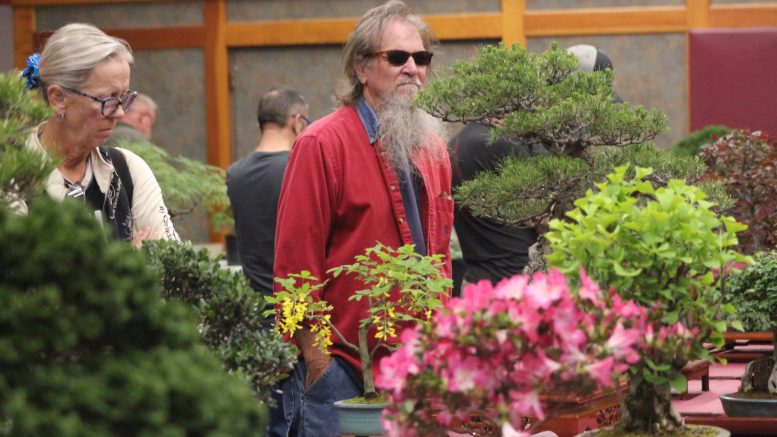
The day began with an hour-long bonsai workshop, allowing visitors to gain first-hand experience of the art of bonsai and even leave with their own tree to nurture and support. Inside the church, visitors observed a showcase of about 70 bonsai trees and bought trees of all ages and types.
The art of caring for bonsai trees dates back to ancient China in 700 AD, and was only practiced by society’s elite, but was later adopted by Japan during the Kamakura period. The Japanese further developed bonsai along with the influence of Zen Buddhism. What began as a status symbol later became a conduit of harmony, luck or patience, and to many Zen Buddhists, an object of meditation.
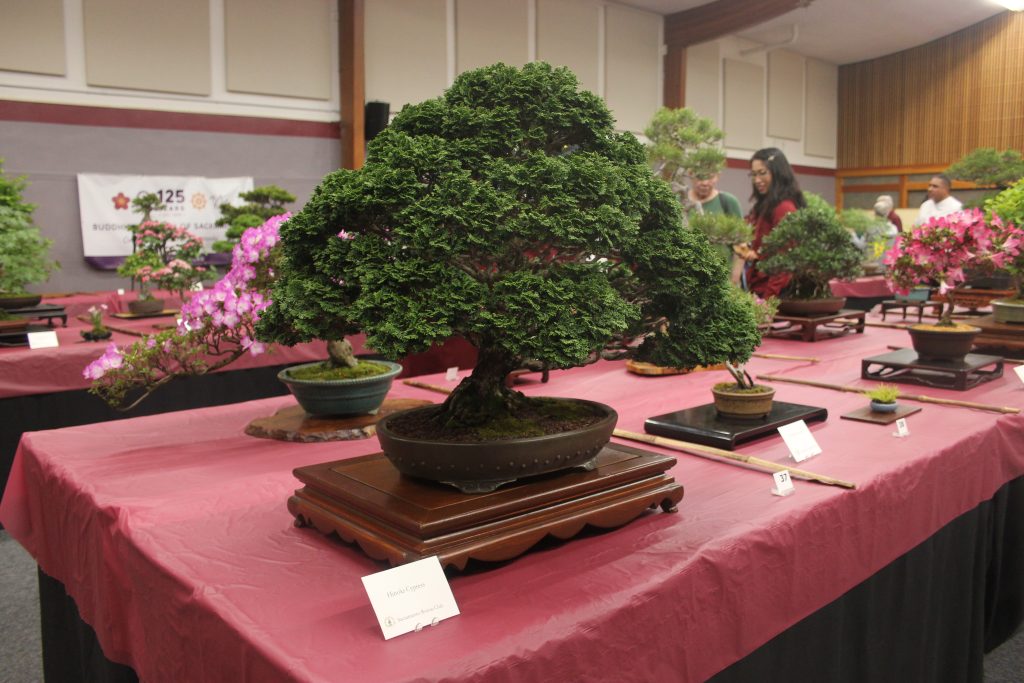
President of the Sacramento Bonsai Club and Helen Sakaishi’s younger sister, Lucy Sakaishi-Judd, continues to care for bonsai trees that belonged to their parents and said caring for bonsai trees is a project that never ends, and most importantly, to remember to water them every single day during hot Sacramento summers.
“Bonsai basically means tree in a pot,” Sakaishi-Judd said. “My late husband and I always told people, you don’t own a bonsai tree, you’re the caretaker of the tree.”
A bonsai tree can always be changed or restyled by another artist, and often has to be over the course of its life due to the effects of nature.
“I have had trees that have fallen, or branches that have broken off due to weather, so I had to restyle it,” Sakaishi-Judd said. “It’s exactly what Mother Nature has done to trees because of lightning, fires or whatever else it creates. It’s something that happens to trees, but they can always change; it’s a beautiful, natural thing.”
The Sacramento Bonsai Club dedicates the annual show to a different member of the club every year. This year, club secretary Helen Sakaishi, has the honor.
“I feel like I don’t deserve it. There are so many people in the club who definitely deserve to be honored, and I’m just humbled by it,” Sakaishi said before joking, “well, I do make sure everybody’s fed.”
When the club first began, it consisted only of Japanese Americans until vice president Paul Holtzen joined around 1985, who brought an interpreter along with him to club meetings. That opened up the opportunity for other members to join.
“What’s really fascinating about it is your trees are never finished,” Holtzen said. “With bonsai, you’re continually improving it for the rest of your life, there’s always something new to learn.”
Even though Holtzen has been practicing bonsai for over 40 years, he still takes instructions from bonsai instructors and learned that joining a club like the Sacramento Bonsai Club is the best way to continue growing like the trees he cares for. Holtzen owns and cares for bonsai trees that belonged to his old mentors, who were a part of the club.
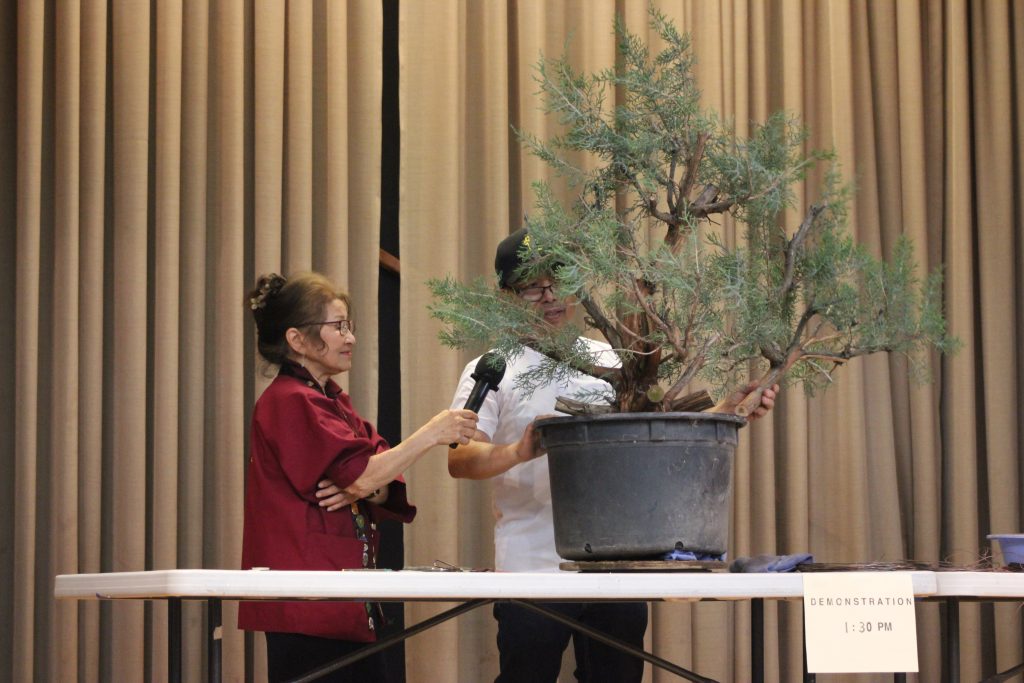
That afternoon, bonsai instructor Sam Adina prepped a California juniper during a demonstration that he said he collected from the wild about 15 years ago; the tree was estimated to be over 100 years old.
“I don’t know how to style this one, so that’s why I decided to bring it here and prep it and let somebody else have that problem,” Adina joked as he removed dead branches from the tree. The tree was later gifted as part of the raffle prizes at the event.
Sacramento resident Mateo Rodriguez was a first-time attendee of the event and was thrilled to find a community revolving around bonsai, a hobby he first picked up in isolation during the pandemic.
“I picked up bonsai during the early pandemic when we were at home,” Rodriguez said. “Honestly, I’ve killed a couple of trees since then, but I loved how it helps me stay calm and focus.”
Holtzen said the club has seen an emergence of new members since the pandemic and is encouraged to see a new wave of excitement.
“We’ve had a big influx of 30-something, 40-something people,” Holtzen said. “We were heading to a point where all of us were in our 60s and 70s, but that has changed.”
In the last decade, bonsai showcases and expos have grown in popularity, as well as the judging and bidding of bonsai trees, resulting in some trees gaining a hefty price tag and even being the subject of burglaries.
“A lot of the old timers have opposed judging the trees, but I’m all for it,” Holtzen said. “I think it really improves the quality of the art form by competing, I think that’s a good innovation.
The Sacramento Bonsai Club has met at the Sacramento Buddhist Church since its inception and is always welcoming new members.
This story is part of the Solving Sacramento journalism collaborative. Our partners include California Groundbreakers, Capital Public Radio, Hmong Daily News, Outword, Russian America Media, Sacramento Business Journal, Sacramento News & Review and Sacramento Observer. Support stories like these here, and sign up for our monthly newsletter.

Be the first to comment on "Sacramento Bonsai Club celebrates 79 years of living history"